
IT Equipment Labeling Solutions Overview

Lead Specialist, Telecom Digitalization & Identification at MakeID
As Lead Specialist at MakeID, he drives digital transformation for physical asset identification in FTTx. Optimizing field maintenance and data accuracy, he helps global telecoms reduce MTTR and enable real-time asset-data alignment.
In today’s era of accelerated digital transformation, the scale and complexity of an enterprise’s IT assets are increasing day by day. Servers, switches, storage devices, terminal computers, network cables… tens of thousands of IT equipment are distributed in data centers, office premises, and various business sites, forming the physical foundation of the enterprise’s digital operations. However, the effective identification and management of these devices have long been the weakest link in the enterprise’s operation and maintenance system.Labels, seemingly insignificant, are the foundation entry point of the entire IT asset management system. A complete IT equipment labeling system is not only a tool for asset inventory but also a key link connecting physical equipment with digital systems.

Without identification or with improper identification, when a network fails, how can one find the specific location of the faulty equipment among thousands or even tens of thousands of cables? Standardized and orderly equipment naming and wire sequence management rules are conducive to the rapid discovery and elimination of faults, directly reducing the fault recovery time and minimizing the systematic operational risks caused by human factors.
Label management is not just about attaching a piece of paper – it is the starting point of digitization in the enterprise’s IT operation and maintenance system, and it is also the fundamental guarantee for consistency between accounts and reality, as well as for full traceability throughout the process.
Core Application Scenarios Overview
The application of IT device labels spans all aspects of enterprise IT management, primarily covering the following six core areas:
Data center server room management
Precise identification and location tracking of servers, switches, storage, cabinets, and PDUs are the core requirements for server room operation and maintenance. A standardized label system can significantly reduce the time for troubleshooting.
IT fixed assets inventory
The barcodes/RFID labels of terminal devices such as laptops, desktop computers, and monitors, combined with the asset management system, achieve consistent accounting and reality throughout the entire life cycle from procurement to scrapping.
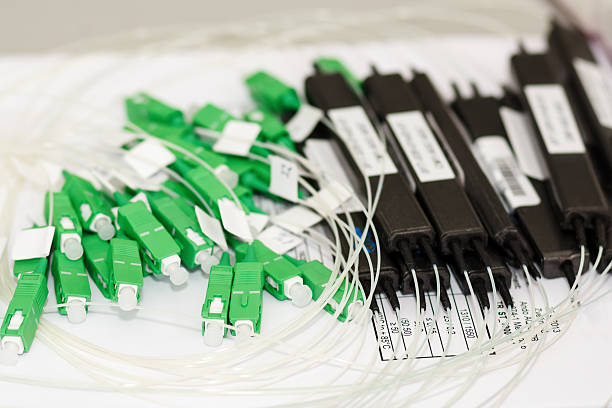
Network cabling identification
Management of labels at both ends of network cables, optical fibers, and patch panel ports follows the TIA-606-C international standard, ensuring clear and traceable cable links and enabling traceability of patch panel changes.
Equipment maintenance and inspection
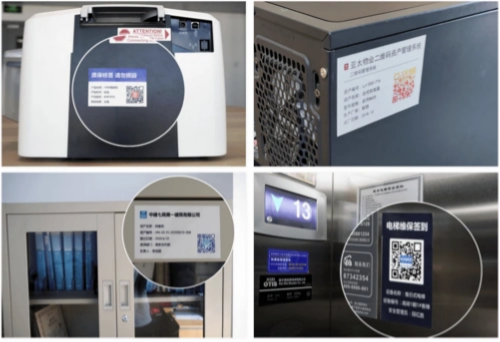
By scanning the QR code or using RFID sensing, on-site personnel can quickly obtain information such as the equipment warranty status, responsible person, and the last maintenance time, enabling mobile inspection management.
Information security compliance management
Special identification management of classified equipment prevents unauthorized access; label information is not exposed to the public and can only be scanned and viewed by authorized personnel to ensure information security.
Multi-site decentralized asset management
In large enterprise groups, IT assets in multiple office locations and cities are uniformly coded and inventoried, achieving centralized management of the entire group’s asset information.
Selection of Technical Routes for Labels
The technical routes for IT equipment labels essentially aim to strike a balance among accuracy of identification, implementation cost, and ease of use. Currently, the three mainstream technical routes each have their own applicable scenarios and advantages and disadvantages.
Comparison of Three Main Technical Paths
| Technical type | Identification method | Single-label cost | Batch reading | Applicable scenarios | Recommendation level |
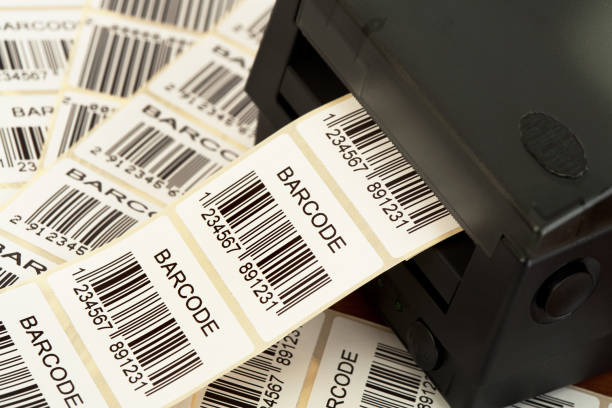
| Barcode | One-by-one scanning | Extremely low (graded) | Not supported | Small-scale, low-budget asset management | Basic plan |
| QR code | Mobile phone / scanner gun | Extremely low (graded) | Not supported | Scenarios for small and medium-sized enterprises, mobile inspection, and information security control | Recommend for small and medium-sized enterprises |
| RFID UHF | Non-contact radio frequency | Medium (dollar level) | Support batch processing | Scenarios for large-scale assets, data centers, and rapid inventory checking | Recommend for large enterprises |

Selection of label materials in special scenarios
| Office terminal equipment | |
| Label type | Self-adhesive PET label |
| Material requirements | Wear-resistant and waterproof |
| Recommended size | 50×25mm |
| Technical solution | QR code + barcode |
| Metal frame equipment (servers / switches) | |
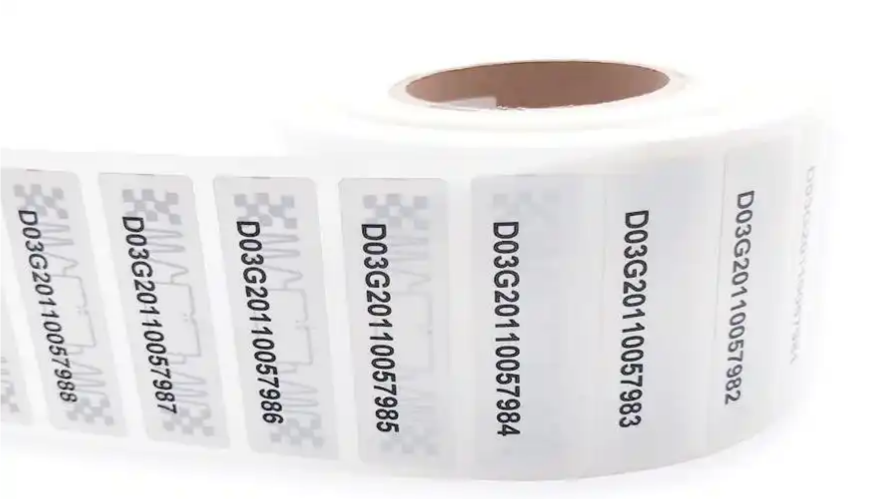
| Label type | Anti-metal RFID label |
| Material requirements | ABS/ epoxy resin encapsulation |
| Recommended size | 50×20mm |
| Technical solution | RFID UHF + Barcode Dual Identification |
| Network cable | |
| Label type | Flag-type cable label |
| Material requirements | Bendable and anti-aging |
| Recommended width | 9mm / 12mm |
| Printing method | Thermal transfer printing |
| Cabinet and patch panel | |
| Label type | Hard embedded labels |
| Durability requirements | UL969 certified, over 15 years |
| Installation method | Uniformly pasted at the top of the front door |
| Technical solution | Bar code + QR code |
Core selection principles: When the number of assets exceeds 5,000, it is recommended to use RFID UHF labels, which can support batch reading at a distance of up to 25 meters; when the number of assets is small or the budget is limited, the QR code solution for mobile phone scanning has both low cost and high information capacity, and the information is not directly displayed on the label surface, so the security is better.
Detailed Explanation of Data Center Computer Room Identification Standards
Data centers represent the most complex and demanding scenario for IT equipment label management. Thousands of meters of cables traverse between racks and cabinets. A single missing or disordered label could cause delays of several hours in troubleshooting. Internationally, standards such as TIA-942, TIA-606-C, and China’s standard GB50174 all have clear regulations on this matter.
The hierarchical structure of the computer room identification system
A standardized computer room identification system should follow the principle of hierarchical division from the macro level to the micro level. Each identifier should be unique and non-repeated globally:
Data center-level coding
It adopts a 4-character letter structure of “regional code + location code”. For example, CNCQ represents Chongqing, China. Ensures unique identification in scenarios involving multiple data centers worldwide.
Computer room and cabinet coding
The cabinet number follows the TIA/EIA-942 international standard and is based on the coordinate position of the information computer room. For multi-level data centers, a floor prefix needs to be added, for example, 3AJ05 represents the cabinet at the third floor, AJ05 coordinate position. The labels should be pasted on the top left of the front door of the cabinet and printed uniformly using 24mm label paper.
Equipment-level label (main equipment)
Standard format: Rack name _ Equipment name _ IP address _ U position (front/back installation information). The content must include information such as equipment name, function, IP/mask, asset number, responsible department, warranty period, etc. The material must be certified by UL969 to ensure that the information will not be lost for 15 years or more.
Each cable should be labeled at both ends with the corresponding label. The content format should be: Source device name + port number → Destination device name + port number. The flag-shaped label is the recommended form for cable identification. It can wrap around the cable to display the information on both sides, is resistant to bending and does not easily fall off.
Power and Environmental Equipment Identification
The identification for power-related supporting equipment such as UPS, PDU, air conditioners, fire protection systems, etc. should include: equipment number, equipment name, manufacturer and technical support hotline, equipment model, serial number, using department, responsible person, activation time and warranty period.
The three principles of the identification standard: ① Use as few characters as possible and keep the encoding as short as possible; ② Include all necessary content and present the core information completely; ③ Avoid repetition and ensure that each identifier is unique throughout the system. All identifications must be in printed form and are prohibited from being handwritten – handwritten script varies from person to person, which is prone to causing information loss or illegibility, and increases maintenance risks.
Common Pain Points and Countermeasures
| Frequently Asked Questions | Root cause analysis | Solution Strategy |
| label detachment or information loss | Inappropriate material selection, not certified by UL969 | Select permanent label materials that have passed UL969 certification. The lifespan of the device labels should be consistent with the design lifespan of the equipment. |
| Long-term discrepancy between records and actual inventory | Labels were affixed but the process was not followed, and manual entry was omitted | Embed the scanning operation into business process nodes. Without scanning, the process cannot be completed. The system imposes mandatory constraints. |
| RFID reading failure on metal equipment | Ordinary RFID labels were attached to metal surfaces, resulting in signal shielding | Metal rack equipment must use anti-metal RFID labels. Their special antenna design can overcome metal interference. |
| Delayed information updates | After equipment was transferred, the label information expired and was not updated by anyone | Deploy a resource identification management system. After data changes, scanning can obtain the latest information, eliminating the need for frequent label replacements. |
| Data silos between multiple systems | The asset system was not integrated with ERP and ITSM | Prioritize asset management platforms with open API interfaces and gradually establish data connections. |
Summary
The IT equipment label solution is essentially the first and most crucial step in the digital management of an enterprise’s IT infrastructure. Without a clear physical identification system, even the most advanced ITSM platforms and CMDB systems will lack a reliable data foundation.
Regardless of how technology evolves, the core value of label management remains unchanged: to enable each IT device to be accurately identified, effectively tracked, and properly managed. This is not only the foundation of IT operation efficiency but also the guarantee for the sustainable advancement of enterprise digital transformation.