
What to Look for When Buying Lab Sample Labels

Lead Specialist, Telecom Digitalization & Identification at MakeID
As Lead Specialist at MakeID, he drives digital transformation for physical asset identification in FTTx. Optimizing field maintenance and data accuracy, he helps global telecoms reduce MTTR and enable real-time asset-data alignment.
In laboratory environments, small details can have major consequences—and labeling is one of the most critical. Poor-quality labels can either peel off when exposed to low temperatures or they will fade after chemical contact or they will break down with time. The result? Misidentified samples, compromised data integrity, and costly experimental errors.
According to laboratory best practices and quality management guidelines, proper labeling is essential for traceability and compliance and reproducibility. The process of selecting appropriate lab sample labels for your organization goes beyond basic organizational needs because it serves as a protective measure for your data. What to look for when selecting lab sample labels for your purchase?
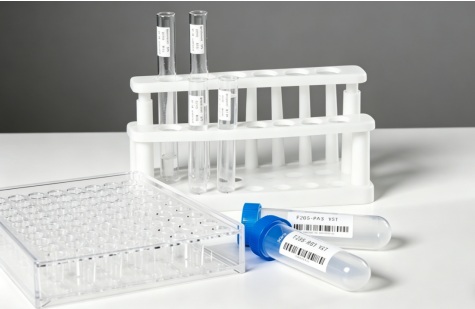
Top Features to Look for When Buying Lab Sample Labels
Label selection requires more than selecting appropriate dimensions. The main features of a label determine its ability to function correctly under actual laboratory conditions.
1. Strong and Reliable Adhesive
Adhesion serves as the primary element which determines how well a label functions. Lab sample labels must stick securely to a variety of surfaces which include glass vials and plastic tubes and metal containers.
High-quality adhesives should:
- Bond well to both smooth and slightly textured surfaces
- Resist peeling in cold or humid conditions
- Maintain grip during handling and transport
According to adhesive science research, surface contamination from oil, moisture and dust can reduce bonding strength by over 50%, which makes proper adhesive application and adhesive quality essential.
2. Resistance to Extreme Temperatures
Temperature resistance is necessary for laboratories that handle both cold storage and high-heat operations.
Reliable labels should withstand:
- Ultra-low freezers (-80°C)
- Cryogenic storage (down to -196°C in liquid nitrogen)
- Elevated temperatures in sterilization or processing
Materials will fail under these conditions because they will experience cracking and shrinkage and loss of adhesion. The selection of temperature-resistant labels enables organizations to maintain their operational activities throughout all their storage and testing durations.
3. Waterproof and Chemical Resistance
Laboratories need to operate in environments where they must manage both liquid substances and disinfectants and solvents. The labels face two challenges because they must remain complete and readable throughout their existence.
The label needs to provide two specific features which include:
- Water resistance for washing and condensation
- Resistance to alcohol, xylene, and other chemicals
- Protection against smudging during cleaning processes
All chemical-exposed labels must maintain their readable state which enables proper identification and hazard communication according to laboratory safety rules.
4. Durable and Smudge-Proof Printing
The label material requires proper testing which needs to deliver permanent and clear print results. The complete sample lifecycle requires all barcodes and sample IDs and vital information to remain accessible.
Key considerations include:
- Compatibility with thermal transfer printing for high durability
- Resistance to abrasion and frequent handling
- produces sharp output with high contrast which enables barcode scanning
Unreadable labels can disrupt workflows and lead to data loss, especially in automated lab systems.
5. Flexible Material for Curved Surfaces
The laboratory needs to use different types of laboratory containers which include test tubes and vials and bottles that all have curved or irregular shapes. The surface of labels needs to stick to these surfaces without creating any lifting or wrinkling problems.
Nylon flexible materials provide:
- Excellent surface matching capabilities to fit various curved surfaces
- Reduced edge lifting or “flagging”
- Better long-term adhesion on irregular shapes
This feature is especially important for sample tracking in high-throughput labs.
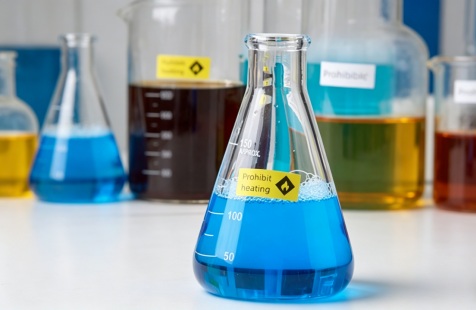
6. Compatibility with Label Printers
Modern laboratories need on-demand printing systems because these systems help them work better while making fewer mistakes.
When selecting labels you need to check their compatibility with:
- Thermal transfer or direct thermal printers
- Portable label printers for on-site use
- Barcode and QR code printing systems
On-site printing allows for immediate labeling which decreases the chance of mislabeling while it enhances the accuracy of work processes.
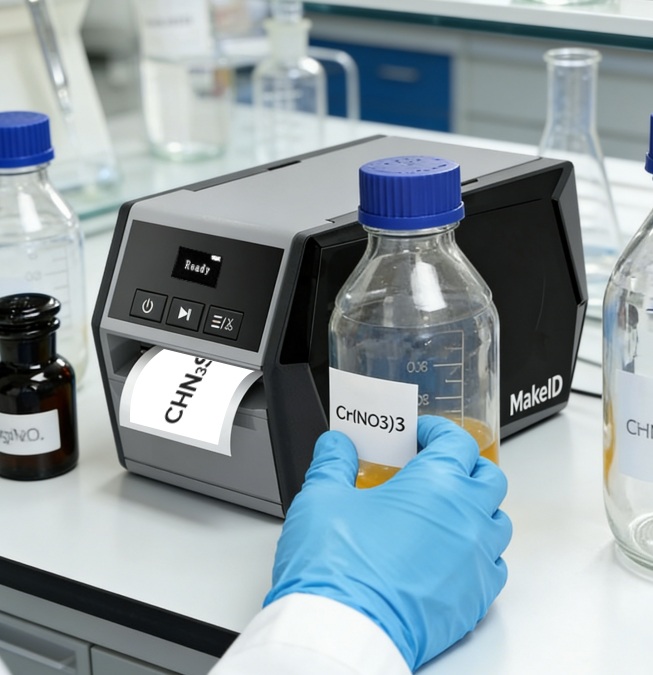
Choosing the Right Label Material for Your Lab
The selection of label materials serves as the essential factor which determines how well labels will perform their intended functions. Selecting the appropriate material from the range of available options will bring about major improvements in both durability and operational performance.
| Material | Key Features | Best Use Cases |
| PET (Polyester) | Waterproof, durable, chemical-resistant | General lab use, storage |
| Nylon | Highly flexible, extreme temperature resistance | Cryogenic storage, curved surfaces |
For example:
- PET labels are ideal for general laboratory use where durability and water resistance are essential for long-term sample identification.
- Nylon labels excel in extreme conditions, including cryogenic storage and labeling curved sample tubes and vials.
Matching the material to the application ensures optimal performance and minimizes failure risk.
A Smarter Way to Label Lab Samples
The increasing complexity of laboratory operations creates a rising demand for labeling solutions that must deliver both effectiveness and dependable performance.
Modern labeling systems—such as those offered by MakeID—combine durable label materials with portable printing technology which enables users to create high-quality labels at the point of use.
They provides multiple benefits:
- On-site printing for immediate labeling
- Compatibility with multiple materials (PET, nylon, etc.)
- Improved accuracy and reduced labeling errors
- Increased efficiency in fast-paced environments
Laboratories should implement a flexible system that adapts to their evolving requirements which allows them to maintain their standard of quality while avoiding their dependence on pre-printed labels.
The Right Label Protects Your Data
Lab sample labels may seem like a small component of laboratory operations, but their impact is significant. The correct label functions through all workflow stages because it enables proper identification and ensures compliance and preserves data accuracy.
The correct label in laboratory settings provides more than adhesion because it guarantees proper sample identification and tracking and complete testing assurance.