
Warehouse Rack Labels: Types And Labeling Ideas

Lead Specialist, Telecom Digitalization & Identification at MakeID
As Lead Specialist at MakeID, he drives digital transformation for physical asset identification in FTTx. Optimizing field maintenance and data accuracy, he helps global telecoms reduce MTTR and enable real-time asset-data alignment.
In the busy world of telecommunications, inventory precision is not only an operational target, but it’s also a must. From delicate fiber-optic parts to huge base station hardware, the ability to find, track, and manage assets fast, directly shapes network uptime and supply chain smoothness. A solid labeling approach is kind of the backbone of that visibility. Let’s see how specialized warehouse rack labels can change your telecom storage, lower picking mistakes, and also work neatly with modern digital management systems so your warehouse runs with maximum exactness.

Core Types for Telecom Warehouse Rack Labels
Choosing the correct label is usually the very first part of getting operational excellence right. In telecom settings, things like durability of materials and the way it plugs into digital systems matter a lot, even more than people think.
By Material (and the reality of harsh places)
Permanent Polyester/PET Adhesive Labels
These are best for racking that stays put, for example fixed bays holding switchgear or cabinet add ons. They’re made to shrug off oil, wetness, and abrasion, which is kinda crucial for telecom warehouses that can get temperature swings.
Magnetic Reusable Rack Labels
Great for shifting storage zones , like temporary repair areas for base station gear. Since they are reusable, you can move them around quickly without the leftover sticky marks. That reduces manual work when the floor plan changes.
Retro-Reflective High-Bay Labels
Built for warehouses with vertical storage above 6 meters. They help forklift operators scan barcodes from farther away, so pick speed goes up a lot, especially with high density inventory.
Anti-Static Special Labels
A telecom must have. When you’re storing delicate modules and chips, these labels help block electrostatic discharge (ESD) damage. In other words, they protect the performance and reliability of expensive electronic parts, even when conditions aren’t perfect.
By Coding and Digital Format
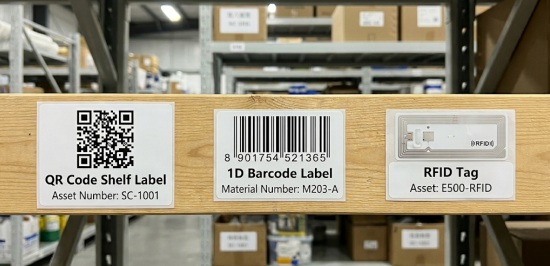
QR Code Labels
The gold standard for “Item-Level Traceability” . A fast scan links straight to inventory records, like serial numbers batch codes and warranty cycles, it plays nice with carrier-grade management systems too.
1D Barcode Labels
A budget friendly option for low value consumables such as zip ties, connectors, and cable management pieces.
UHF RFID Integrated Labels
For bigger telecom hubs these let you do bulk, long range reading. You can run a full inventory check on a pallet of fiber-optic cables in seconds, it’s very direct and saves time.
By Function
- Main Rack Header Label: Gives a broader, top level overview for certain zones like “Fiber Optic” or “Power Supply” areas, so people can spot quicker.
- Layer/Bin Location Labels: Uses consistent codes such as Zone-Aisle-Bay-Level, that point to the exact shelf position, down to the right layer and bin.
- Warning Special Labels: Really important for safety, they identify hazardous battery storage or those ESD-sensitive zones, you know like electrostatic discharge areas.
Smart Labeling Ideas for Telecom Warehouses
A label is only as good as the system behind it, so, implementing a few solid strategies can really make things smoother.
Color-Coded Visual Classification
Following industry standards (like BICSI), utilize color-coding to minimize human error:
- Blue: Networking and switching equipment.
- Yellow: Fiber optics and passive components.
- Red: Power supplies and batteries.
- Green: Finished base station units.
Benefit: Warehouse staff can spot the right zone quickly, at a glance, which helps cut down mispicks, and the whole pick- pack flow feels a lot less chaotic..
Hierarchical Location Coding
Adopt a universal coding syntax:TEL-W-A05-R12-L3 (Telecom Warehouse–Zone A–Aisle 5–Rack 12–Level 3). When your physical labels really do match your WMS fields, manual data entry errors are practically gone, almost instantly. Using tools like the MakeID Label App, you can import your Excel inventory list to generate thousands of unique, accurate labels in minutes.
The Dual-Label System
For high-precision telecom supplies, use a two-pronged approach:
Rack Level: Provides location context.
Product Level: A QR code on the item packaging that binds the part to the location. This ensures that the item in your hand matches the record in your system.
Mobile On-Site Custom Labeling
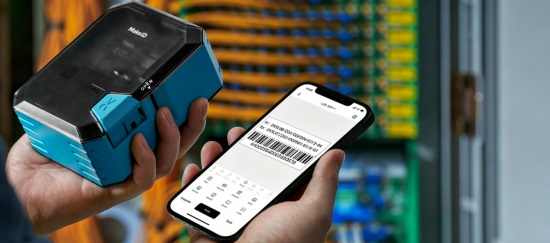
In telecom engineering, it happens a lot that returns come in “ just-in-time” or there’s an emergency repair kit that suddenly needs attention. In those cases, bringing a portable, Bluetooth enabled MakeID label printer on-site helps operators print hard wearing, professional style labels basically right there, in seconds, even on the floor.
Common Mistakes to Avoid in Telecom Rack Labeling
Mistake 1: Choosing standard paper labels.
Telecom warehouses can get humid, really humid sometimes. Regular paper weakens fast, and then you get these “ghost assets”, meaning items are still physically in the warehouse, but they’ve lost their identity, or the label is unreadable. Go with industrial-grade PET materials every time.
Mistake 2: Disconnected coding.
If your label content isn’t synchronized with your WMS SKU codes, then you’re not managing inventory. You’re only marking locations. It feels similar, but the outcome isn’t.
Mistake 3: Picking permanence when flexibility is needed.
Be careful with permanent glue on storage bays that change often. Instead of locking everything in place forever, use magnetic solutions so you avoid unnecessary rack wear and physical damage during reconfiguration.
Mistake 4: Overlooking safety requirements.
Don’t use ordinary adhesives in areas that hold volatile goods, like lithium batteries. Make sure labels are flame-retardant, and also static-neutral , not just “durable” in general.
Effective labeling is not only a logistical routine — it is a strategic investment in how dependable your telecom operations are. When you select the right materials, build a logical hierarchical coding system, and use flexible on-site printing tools like MakeID, your warehouse stops being only a storage space. It becomes a highly efficient, digitally aligned logistics hub. Keep your labeling system evolving as quickly as your infrastructure does, then you should see both accuracy and throughput rise, in a steady way.
Ready to modernize your telecom warehouse labeling? Visit MakeID Global to find the industrial-grade solutions tailored for your business needs.