
Thermal Transfer Printers vs. Inkjet : Which Is Better for Outdoor?
In outdoor, industrial or high-intensity working environments, labels are not only carriers of information, but also directly related to safety, efficiency and compliance.
Whether it is equipment asset identification, cable labels, or warning labels for warehouses and construction sites, a core issue always remains: For outdoor labels, should a thermal transfer printer or an inkjet printer be chosen?This article will conduct a professional comparison from dimensions such as durability, cost, and usage scenarios to help you choose the label printer that suits you.
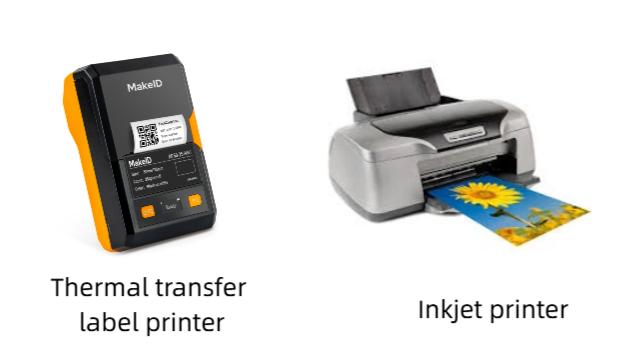
Printer Technology Overview
Before discussing “Which one is more suitable for outdoor use”, we need to first understand the fundamental differences between these two printing technologies at the principle level. The difference in printing methods directly determines the durability, maintenance cost and applicable environment of the labels.
| “Comparison project” | Thermal Transfer Printer | Inkjet printers |
| Working principle | The printhead heats the ribbon, melting the solid ink and transferring it onto the label material, forming a strong physical adhesion. | spray liquid ink into the surface of label material in the form of microdroplets. |
| Core consumables | Ribbon + Label. The ribbon determines print durability. | Ink + Label. The ink properties and label coating both affect the printing results. |
| Print quality and speed | Optimized for high-precision barcodes, text, and graphics, it maintains stable clarity even at high-speed printing, making it the industry standard for industrial marking. | Excellent at printing high-resolution full-color images and photos, but may experience stability issues when printing barcodes at high speeds and continuously. |
| Outdoor durability | excellent. The ink is embedded in the label surface, making it scratch-resistant, waterproof, chemically resistant, and UV-resistant, designed for long-term outdoor use. | Generally speaking, the ink adheres to the surface, and even with waterproof ink, it is prone to fading and peeling due to physical friction or UV exposure without special coating treatment. |
| Maintenance and usage costs | Relatively simple structure, low failure rate, and controllable long-term maintenance costs. | The printhead is prone to clogging due to ink drying, requiring regular cleaning and maintenance, resulting in higher long-term use and maintenance costs. |
Key Takeaway: Why Inkjet Printing Isn’t Suitable for Long-Term Outdoor Labeling?
While inkjet printing offers advantages in color visuals and media flexibility, its underlying technology dictates that the ink can only remain on the material surface.
This means that even with so-called waterproof inks, inkjet labels still have inherent limitations in the following areas:
Easily scratched and worn
Discoloration is obvious after long-term sun exposure
Difficult to tolerate oil stains, chemicals or cleaning agents
As long as the labels need to be exposed to outdoor or industrial environments for a long time, thermal transfer technology is a more reliable basic choice.
Under What Circumstances, Outdoor Labels Must Choose Thermal Transfer?
Not all labels require industrial-grade durability, but if your usage scenario meets the following characteristics, inkjet solutions often fail in the short term, while thermal transfer is almost the only feasible solution:
- It requires long-term readability, with a usage cycle measured in “years”
- Exposed to sunlight, rain, sandstorms or high and low temperature environments
- It needs to be resistant to friction, scratches or chemicals
- Involving asset management, safety warnings or regulatory compliance labels
When used in combination with weather-resistant materials such as PET and PVC, as well as resin-based carbon ribbons, heat transfer labels can significantly extend their service life and reduce the cost of repeated replacement.
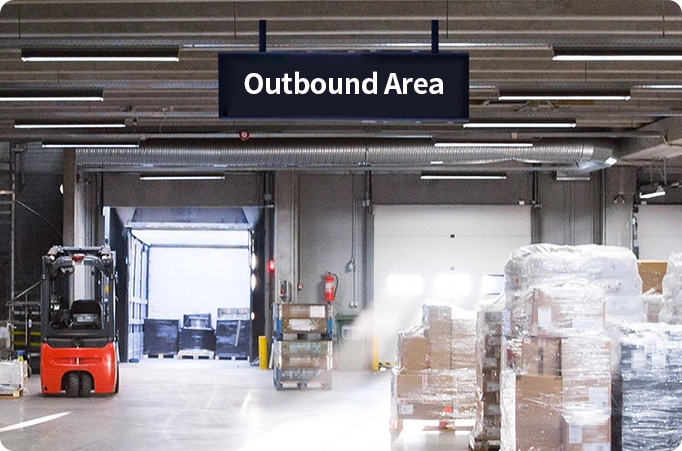
Select by Scene: Your Label Solution
The following practical application scenarios are not simple examples but rather realistic verifications of the above conclusion.
Outdoor asset and equipment management
In the management of power, communication, municipal or engineering equipment, labels are often exposed to strong ultraviolet rays, rainwater and temperature differences for a long time.
The core requirement is only one: to remain legible many years later.
Inkjet-printed asset labels are more like “temporary records”, while thermal transfer (printer + resin ribbon + synthetic label) offers a solution close to a “permanent nameplate”. One-time investment, long-term maintenance-free, which is more in line with the logic of professional asset management.
Industrial manufacturing and compliance labeling
In manufacturing and chemical environments, labels are not only information descriptions but also part of the compliance system.
They need to endure:
- Oil stains come into contact with chemicals
- High-frequency cleaning and wiping
- High temperature or complex working conditions
Inkjet labels are prone to failure in such environments and often fail to meet the regulatory requirements for “permanent identification”. Thermal transfer printing is a mature solution for achieving industrial-grade reliability and compliance.
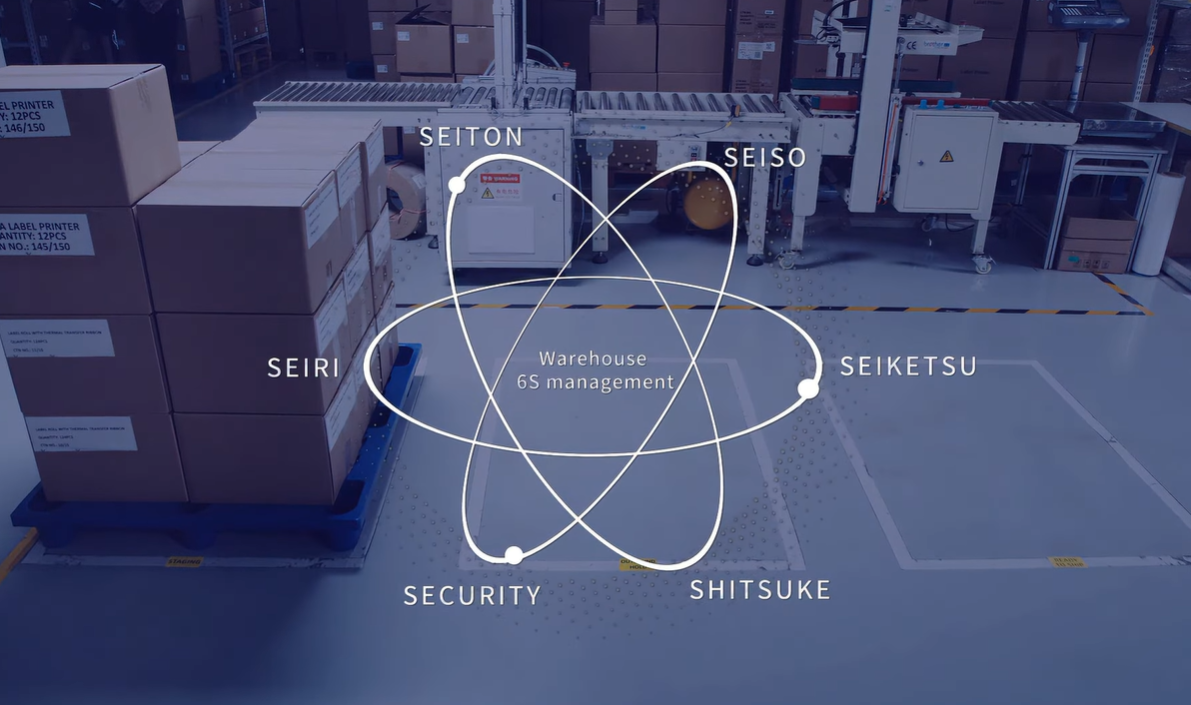
Retail and outdoor products labels
Retail and outdoor product labels may seem to be in a mild environment, but frequent touch, light friction and intermittent outdoor exposure are precisely the scenarios where inkjet labels are most prone to failure.
Once the label is damaged or blurred prematurely, it will not only affect sales but also damage the professional image of the brand. Thermal transfer printing, with a higher reliability lower limit, provides stable and reliable marking guarantees for products throughout their entire life cycle.
A Reliable Solution for Outdoor Printing Needs: MakeID EP53
After clarifying the requirements for durability and stability of outdoor labels, choosing a device that is truly suitable for on-site and industrial environments is the ultimate solution to the problem.
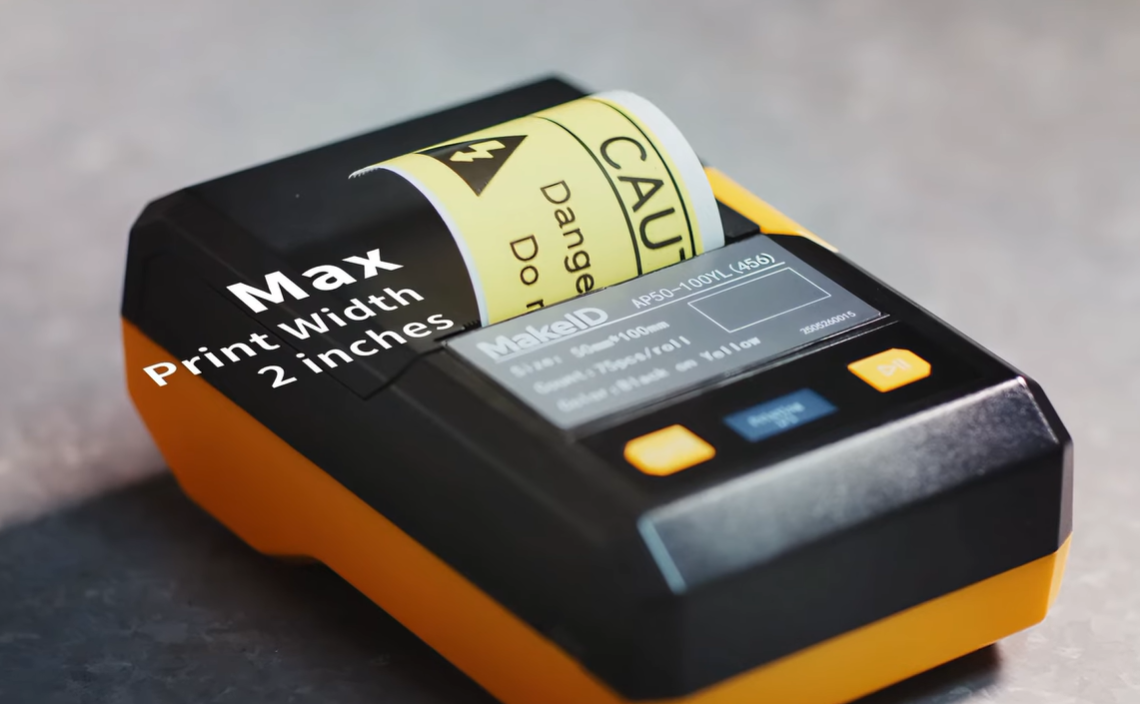
MakeID EP53 industrial-grade portable thermal transfer label printer is precisely designed for outdoor and field applications:
- 300 DPI high-definition printing, with clear and sharp text and barcodes
- Supports a variety of weather-resistant label materials, suitable for outdoor and industrial environments
- Lightweight and portable, it is convenient for on-site and mobile operations
- Supports multi-device connection including mobile phones, tablets and computers
- It is widely applicable to cable identification, asset management, warehousing and construction sites
Conclusion
In outdoor and industrial applications, the value of a label lies not in how well it looks when it’s first printed, but in whether it remains clear, identifiable, and reliable years later.
Considering durability, cost, and professionalism, thermal transfer printers are the best choice for outdoor labels, and the MakeID EP53 is an ideal device that combines performance and portability.