
QR Code Labeling Solutions for Data Center Maintenance: Smarter Asset Management Starts Here

Lead Specialist, Telecom Digitalization & Identification at MakeID
As Lead Specialist at MakeID, he drives digital transformation for physical asset identification in FTTx. Optimizing field maintenance and data accuracy, he helps global telecoms reduce MTTR and enable real-time asset-data alignment.
As data centers grow larger and more complex, O&M teams face mounting asset management strain. Outdated tagging like handwritten marks, regular barcodes and paper logs fails modern operational demands. QR code labeling solutions are emerging as a foundational tool it speeds up equipment identification, stores abundant asset data and connects smoothly with diverse asset management systems.

How EaThe Challenges of Data Center Maintenance
Managing a data center means tracking hundreds or thousands of servers, switches, cables, and power units across dense rack environments. Without a reliable labeling system, teams run into recurring problems:
- Slow asset identification during inspections and audits
- Human error from manual data entry and handwritten records
- Incomplete maintenance histories that make troubleshooting harder
- Poor team coordination when asset information lives in silos
- Label degradation caused by heat, humidity, and physical wear
These inefficiencies translate directly into longer downtime, higher labor costs, and increased compliance risk.
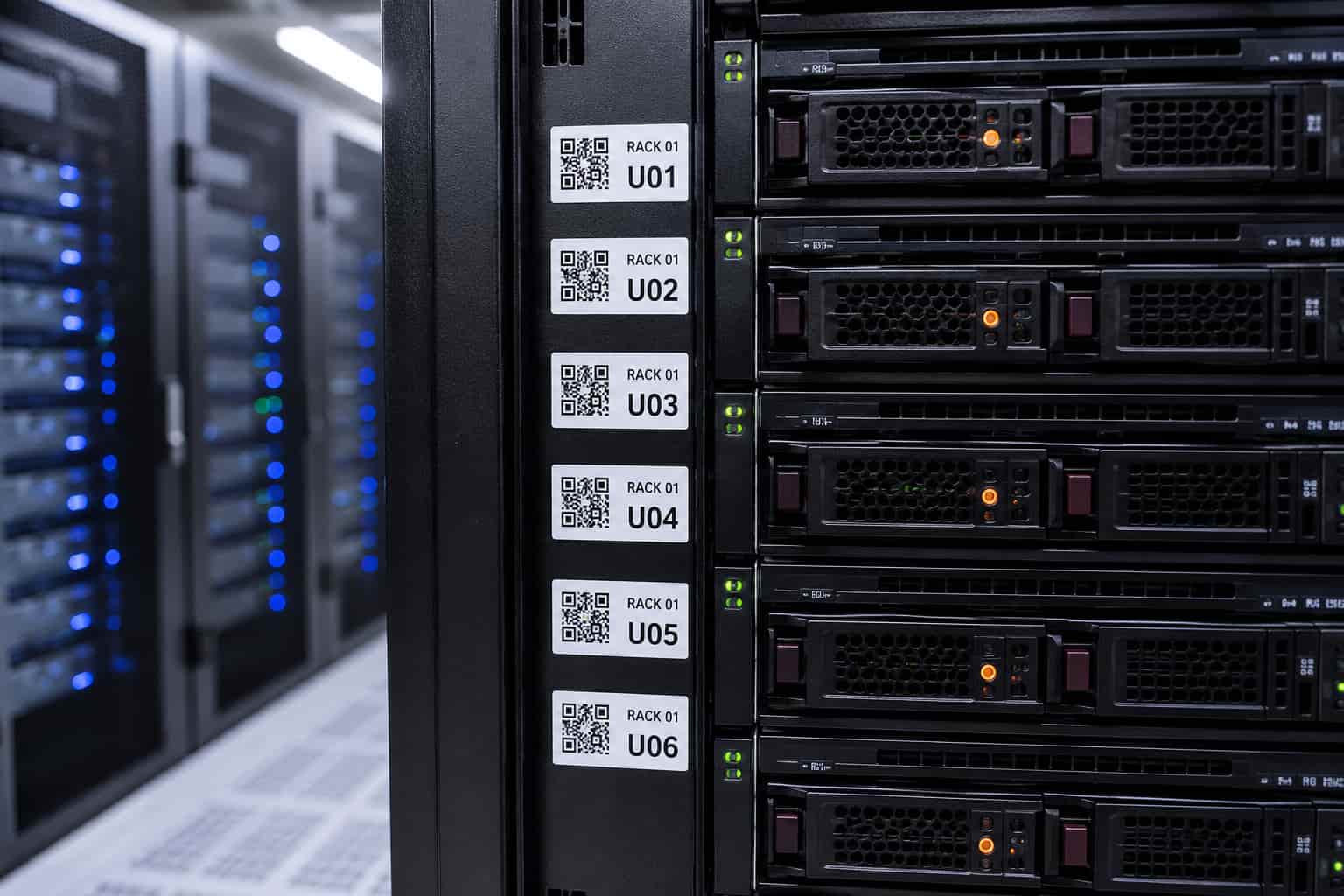
What Is a QR Code Labeling Solution?
QR code labeling solutions sort of swap out the usual asset labels with scannable QR codes, so each real device is mapped to a full digital profile and own unique asset ID, that means maintenance staff can quickly pull up device specifications location details, maintenance history, plus any pending work orders, just by scanning it using pretty much any mobile device.
Compared with barcodes, QR codes hold more information and they also allow multi-angle reading, which is especially handy when rack space is tight or awkward. And compared with RFID, QR code approach generally doesn’t need extra readers or extra wireless RFID infrastructure, so the whole setup usually ends up costing less.
For data center use, labels are typically printed on durable materials — polyester, anodized aluminum, or anti-static substrates — designed to withstand high temperatures, UV exposure, and frequent handling.
Key Applications in Data Center Maintenance
QR code labels can create value for various workflows in data center operations and maintenance:
Server & Network Device Identification
Technicians instantly access device specs, warranty status and configuration manuals via QR scan without logging into external systems.
Cable Management
Labels affixed to both cable ends enable quick tracing of wiring links, drastically cutting operational errors during patch cord rearrangement or equipment decommissioning.
Asset Inventory & Auditing
Cabinet-by-cabinet QR scanning replaces conventional spreadsheet-based stocktaking, greatly shortening physical verification cycles.
Fault Response & Work Order Processing
Upon equipment failure, label scanning auto-populates asset details on work orders and links to full historical maintenance records.
Preventive Maintenance Scheduling
Labels embed direct links to maintenance calendars, inspection checklists and manufacturer guides to guarantee on-time execution of periodic servicing tasks.
Labeling Workflow: From Assignment to Maintenance
A well-structured QR code labeling workflow ensures consistency across your entire asset lifecycle. The recommended process follows six steps:
1. Assign Unique Asset ID Every piece of equipment receives a unique identifier following a standardized naming convention — typically incorporating location, device type, and sequence number. A consistent ID schema is the foundation of reliable asset tracking.
2. Generate QR Code The asset ID is encoded into a QR code using your labeling software or DCIM platform. At this stage, you can also embed supplementary data such as rack position, installation date, or department ownership.
3. Print Durable Label The QR code is printed onto a substrate suited to the deployment environment. For most data center applications, this means a heat-resistant, scratch-proof material that maintains scan reliability over years of use.
4. Attach to Equipment Labels are applied to a consistent, visible location on each device — typically the front face panel or top surface — following a documented placement standard so any technician can locate them quickly.
5. Link to Asset Database After attachment, the label is scanned to create or confirm its record in the CMDB or DCIM system. This step activates the label and establishes the connection between the physical tag and the digital asset profile.
6. Scan During Maintenance From this point forward, every maintenance interaction — inspection, repair, upgrade, or decommission — begins with a scan. This ensures the asset record is always current and builds an accurate, auditable service history.
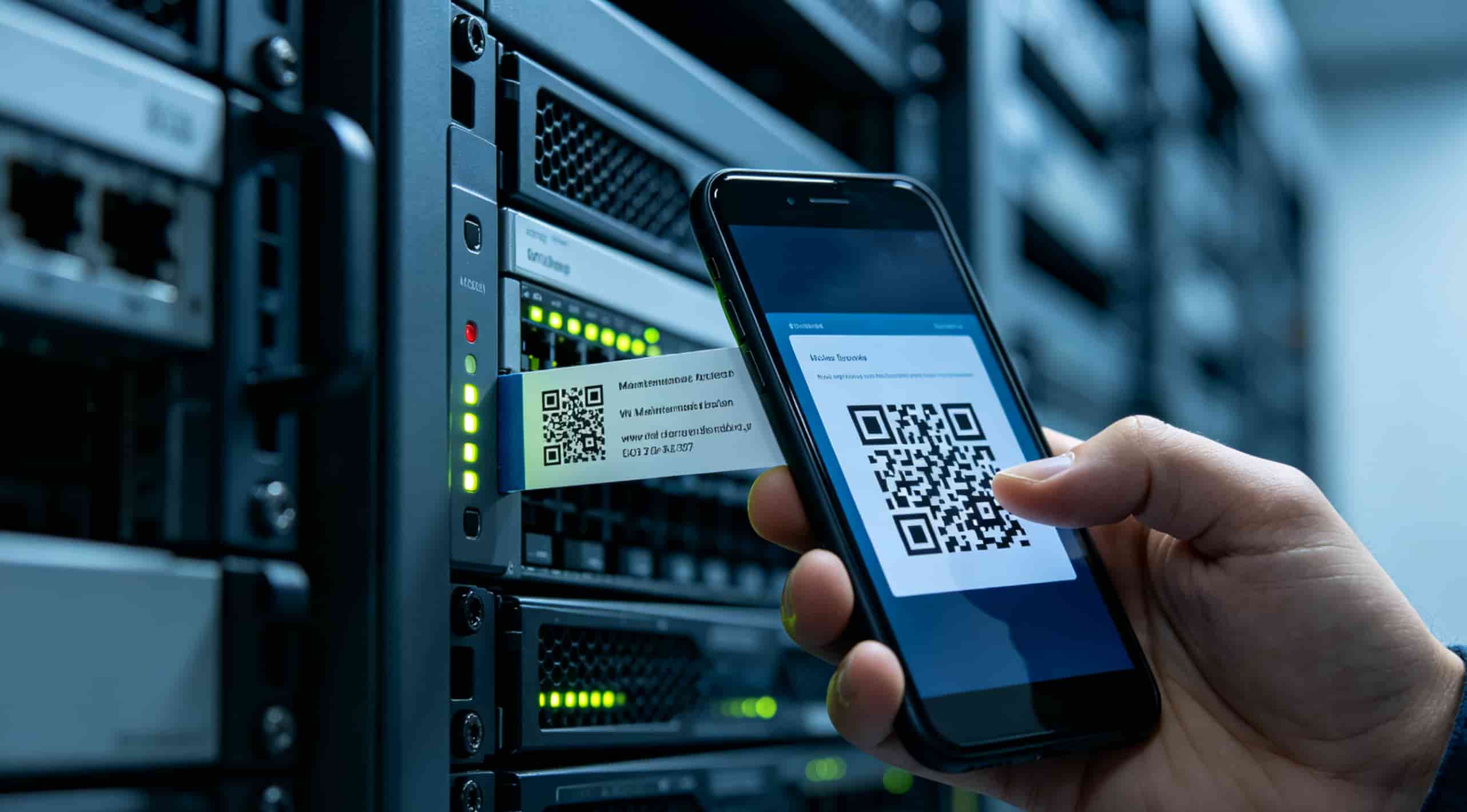
How Portable Label Printers Support Data Center Maintenance
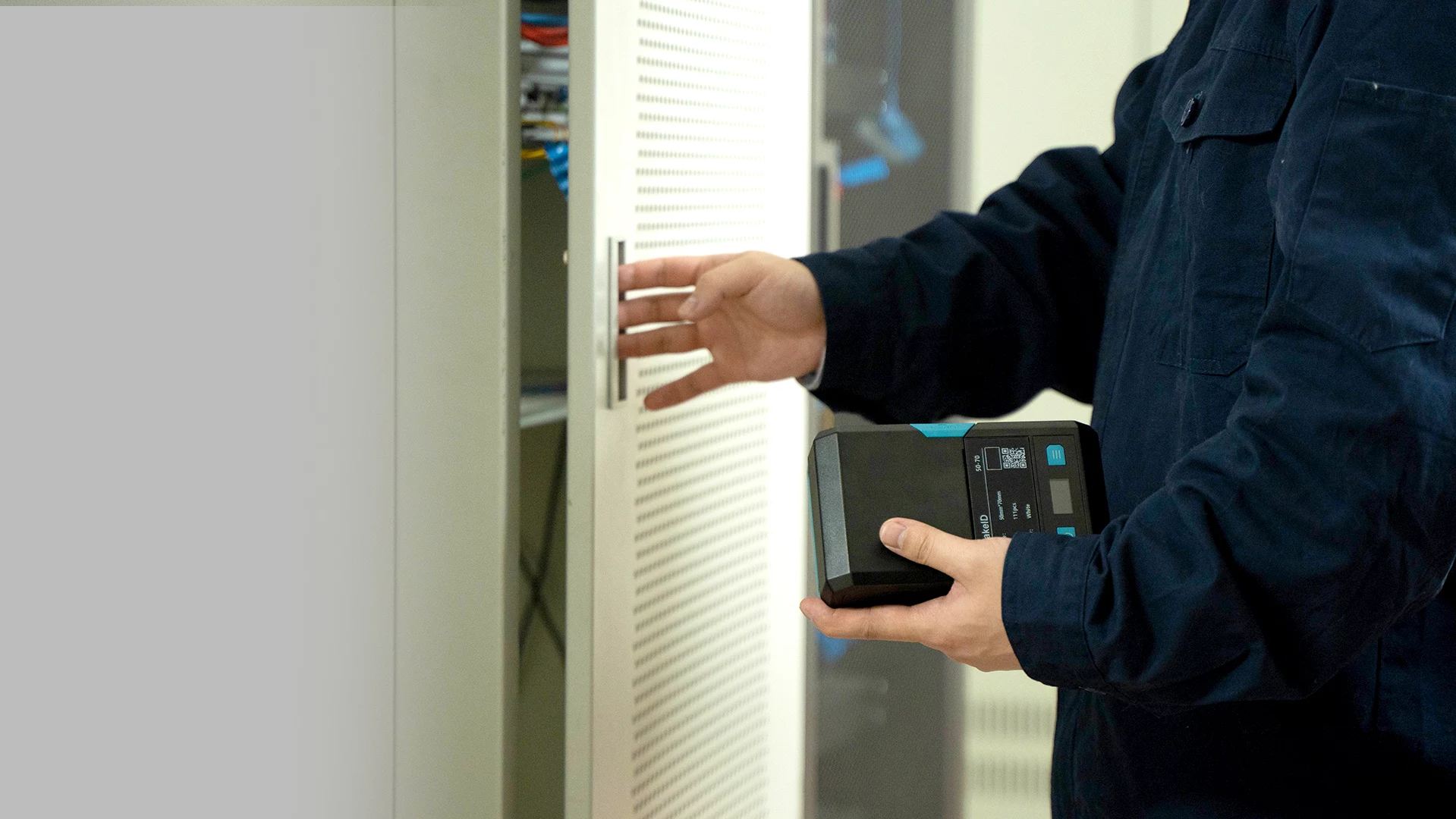
The MakeID M200D is purpose-built for data center labeling workflows. Weighing just 460g with a 2-inch 300DPI print resolution, it produces sharp QR codes and barcodes directly at the rack — no trips back to a fixed workstation. The all-in-one cartridge system supports flag, flat, winding, and hanging label formats across 6–48mm widths, covering servers, cables, switches, and optical transceivers in a single device. With a 2600mAh battery for all-day operation and cross-platform compatibility across Windows, macOS, iOS, and Android, the M200D keeps your labeling workflow moving as fast as your maintenance team.
Key Benefits of QR Code Labeling for Data Centers
Implementing a structured QR code labeling system delivers measurable improvements across operations:
- Faster asset identification — Technicians access complete device records in seconds rather than searching through spreadsheets or ticketing systems
- Reduced errors — Automated data population eliminates transcription mistakes common in manual workflows
- Full traceability — Every maintenance action is logged against the asset, creating a reliable audit trail
- Faster incident response — First responders arrive at a fault with immediate access to device history and related documentation
- Simplified compliance — Consistent records support regulatory audits and internal governance requirements
- Lower operational costs — Reduced time on inventory, faster troubleshooting, and fewer avoidable failures add up to significant savings
Implementation Best Practices
To get the most from a QR code labeling rollout, data center teams should plan carefully across a few key areas:
Label Material Selection — Match substrate choice to environmental conditions. Standard polyester suits most server rooms; metal-faced labels are preferable in high-heat or high-humidity zones.
Naming Convention Design — Establish a clear hierarchical numbering structure before generating any QR codes. Adding conventions after deployment is not only costly but also prone to introducing errors.
System Integration — Ensure the label platform can interface with existing DCIM, CMDB, or ITSM tools via API. Independent label databases disconnected from the operations system quickly become obsolete.
Label Replacement Policy — Clearly define the triggering conditions for label replacement—physical equipment damage, relocation of equipment, or change of ownership—and document the relabeling process.
Staff Training — Even simple scanning workflows require consistent team adherence. Brief onboarding training and clear SOP documentation are essential compliance foundations for ensuring accurate record keeping.
Choosing the Right QR Code Labeling Solution
When evaluating solutions, consider these dimensions:
| Criteria | What to Look For |
| Durability | Label lifespan rated for your environment |
| Software Integration | API compatibility with DCIM / CMDB platforms |
| Print Flexibility | Support for on-demand and batch printing |
| Scalability | Handles growth from hundreds to tens of thousands of assets |
| Vendor Support | Documentation, training resources, and responsive service |
Avoid solutions that treat labeling as purely a hardware problem. The software layer — how QR data is generated, managed, and integrated — determines long-term value.
Conclusion
QR code labeling solutions helps data center teams track assets accurately, respond to incidents quicker, and boost compliance easily. It connects physical gear to detailed digital info with a simple scan. This cuts down on manual tasks for techs and builds the data foundation needed in modern data centers.
Whether you’re managing a single facility or a distributed portfolio of sites, a structured QR labeling workflow is one of the highest-return investments available in data center operations today. Start by auditing your current asset identification process — the gaps it reveals will show you exactly where QR code labeling can make the biggest difference.