
Labeling Solutions For Harsh Environments: Ensuring Durable Identification
When using equipment, cables and assets in environments with high temperatures, chemicals, humidity, ultraviolet rays or continuous wear and tear, ordinary labels often cannot maintain their readability for a long time. The extreme conditions can make labels get faded very fast, lose their sticking and become useless. In a factory or site this is not only a trouble but it can also hinder safety measures, bring about operational disruptions and tracking of assets can be affected as well.In this guide, you will discover a thorough examination of how to choose the printing technology, label materials that will keep your labels long-lasting even in the most adverse conditions.

What Is The “High Durability” Label?
The “durability” of a label is a reflection of its overall performance, mainly depending on the material and printing technology, which is specifically manifested in its ability to resist the following environmental threats:
High-temperature resistance performance
Impact: The common labels will get brittle, shrink, and the adhesive underneath will melt at high temps causing either separation or unclear writing.
Necessity: Labels for machines like engines, boilers, and high-temperature pipelines need to endure up to thousands of degrees Celsius for a long time not only to keep their physical properties but also to keep the data readable.
Waterproof and moisture-proof
Impact: Moisture can seep into labels, causing damage to paper labels, staining of printed content, and even mold growth.
Necessity: In outdoor, offshore platforms, food processing, refrigeration and freezing, and other damp or highly condensed water environments, labels must have excellent waterproof and moisture-proof performance.
Resistant to chemical corrosion
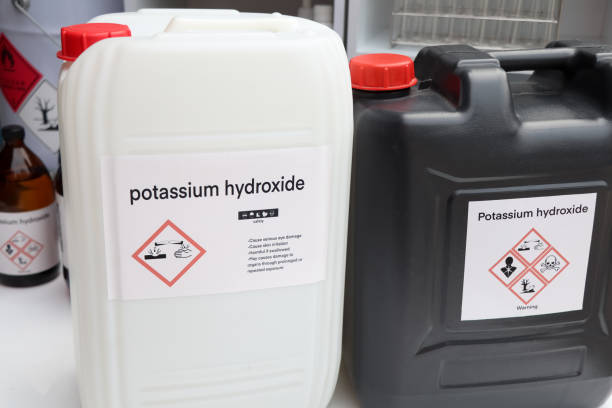
Impact: The printed labels may lose their visibility and ultimately get wiped out because of the chemical reactions start with corrosion of the label’s surface by chemicals (such as solvents, acids, alkalis, and oil stains).
Necessity: Records in the disguise of labels in chemical industries, laboratories, and machine tool workshops must be able to endure all the rough handling of chemical reactants so as to be read after such contact with chemicals.
UV-resistant
Impact: Ultraviolet rays in sunlight are the “invisible killers” of labels, causing the label material to age and turn yellow, and the printed content to fade rapidly.Necessity: All outdoor applications, such as photovoltaic panels, communication towers, and outdoor assets, require labels to have excellent UV resistance to withstand long-term exposure to sun and rain.
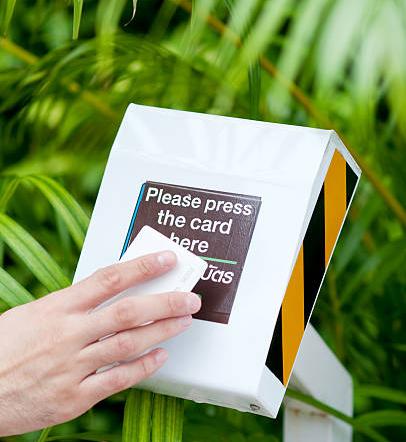
Scratch-resistant
Impact: Physical friction can scratch off the print layer on the label surface, making the text and barcodes unrecognizable.
Necessity: On production lines, tools, frequently touched equipment and cables, labels must be “tough” enough to withstand daily wear and scratches.
The Best Printing Technology For Harsh Environments: Thermal Transfer
Of all printing technologies (thermal, inkjet, laser, etc.), thermal transfer printing is best suited for industrial and outdoor labels that require high durability.
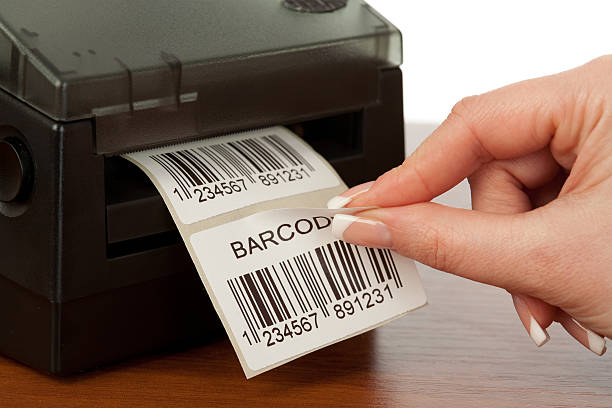
Why is thermal transfer superior to direct thermal and inkjet printing?
Direct thermal sensitivity: The label changes color when exposed to heat, but the handwriting is unstable. It will quickly turn black or fade under high temperatures, sunlight or chemical contact, and has a very short lifespan.
Inkjet printing: The ink only adheres to the surface, is easily scratched and dissolved by chemicals, and has poor durability.
Thermal transfer: By heating the carbon ribbon, solid ink is permanently fused into the molecular structure of the label material. This combination forms an extremely strong printing layer, thereby achieving outstanding scratch resistance, chemical resistance and weather resistance.
The effect printed by thermal transfer printing is clear, accurate and does not fade for a long time. It is perfectly suitable for all demanding scenarios such as outdoor, chemical, computer room and cable marking.
A portable Bluetooth thermal transfer printer suitable for Outdoor
The flexibility of modern industrial maintenance has given rise to the demand for portable printing.
Outdoor applications: Print pipeline markings on the spot at construction sites and attach temporary labels to equipment during electrical inspections.
Advantages of Bluetooth connection: Connect to mobile phones and tablets via Bluetooth, free from the constraints of computer cables, and achieve true on-site on-demand printing.Portability: The lightweight design enables engineers to carry it easily, meeting the needs of mobile operations and significantly enhancing work efficiency.
Choosing the right label material for harsh environments
Materials are the first line of defense for durability. Choosing the right surface material is the cornerstone of success.
Polyester (PET) labels: Durable materials with wide applications
Excellent dimensional stability, temperature resistance (-40°C to 150°C), chemical resistance and wear resistance. It is one of the most versatile and common high-performance label materials in industrial environments.
Polyimide label: An outstanding choice for high-temperature environments
It can withstand continuous high temperatures above 260°C and instantaneous high temperatures of 400°C, with excellent chemical resistance. It is widely applied in welding, circuit board (PCB) and aerospace fields.
Vinyl labels: Combining flexibility and long-lasting outdoor durabilityIt has excellent flexibility, weather resistance and water resistance, and is suitable for outdoor equipment, gardening tools and assets that need to fit curved surfaces.
Polypropylene (PP) labels: An economical choice to meet specific needs
It offers better flexibility than PET and has excellent moisture resistance and general chemical performance, making it a cost-effective choice in semi-harsh environments.
Specialty materials: polycarbonate, metals and advanced synthetic materials
Polycarbonate: Extremely high impact resistance and high-temperature resistance.
Metallized materials/aluminum foil: Offer ultimate temperature resistance, barrier properties and aesthetic appeal.
Teslin and other synthetic papers: They have extremely high water resistance and tear resistance.
The function of protective coating: to enhance the performance of materials
Applying a glossy film or protective varnish after printing can significantly enhance the label’s scratch resistance, chemical resistance and UV resistance, providing an additional barrier for the printed content.
Industry applications that require high-durability labels
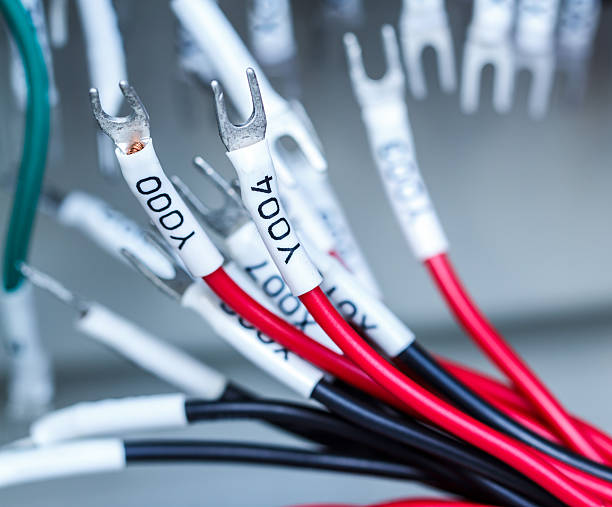
Electrical and data wiring
In the computer room and weak current well, the cable labels need to be clear and durable to ensure that maintenance personnel can quickly and accurately identify the lines.
Manufacturing and heavy machinery
The labels on the production line need to be resistant to oil stains, coolant and frequent physical contact.
Outdoor installation
The labels of smart meters, photovoltaic power stations, communication base stations and other facilities must withstand the long-term tests of wind, sun, rain and snow.
Oil and Gas
In drilling platforms and refineries surrounded by high temperatures, oil stains and chemicals, labels must withstand extreme conditions to ensure safety and compliance.
Offshore engineering/offshore equipment
The Marine corrosive environment with high salinity and humidity poses the highest requirements for the salt spray resistance and moisture-proof performance of labels.
Professional skill: Ensure the long-lasting performance of labels
How to prepare the surface correctly: Ensure that the bonding surface is clean, dry and free of oil stains. Wipe with alcohol when necessary.
The correct printer temperature setting: If the temperature is too low, the print will not be firm; if it is too high, the label will be damaged. Optimize the Settings based on the combination of labels and ribbons.
Choose the right carbon ribbon – label combination: Follow the “material matching” principle, for example, PET labels with resin-based carbon ribbons.
Use lamination under extreme ultraviolet radiation: For outdoor applications that are exposed to long-term sunlight, add a transparent protective film (lamination) on the printed label to extend its lifespan several times over.
Environmental testing tip: Conduct small-batch testing before large-scale application. Place the sample in an actual environment (or a simulated environment, such as wiping with a solvent or baking at high temperature) to test its performance.
Common Problems and Solutions of Labels in Harsh Environments
Problem: The text has faded
Solution: Use resin carbon ribbons or UV resistant materials.
Problem: The label has fallen off
Solution: Use stronger adhesion or ensure the surface is completely dry.
Problem: The print is blurry or easily erased
Solution: Increase the printing temperature or use wear-resistant materials.
Problem: The label cracks in cold weather
Solution: Use flexible Vinyl labels suitable for low temperatures.
Conclusion: The Right Printer + Materials = Long-term Reliability
In a harsh environment, an ineffective label may become the weakest link in the entire operational chain. Investing in high-durability label solutions is an investment in safety, efficiency and traceability.
The combination of thermal transfer printing technology with high-performance label materials and resin-based ribbons is the best solution to address extreme environmental challenges. The emergence of modern portable Bluetooth thermal transfer printers has extended the boundaries of this reliability from factory workshops to every site where it is needed, providing unprecedented convenience and reliability for mobile operations in outdoor and industrial fields.