
Label Printers for Heat-Shrink Tube Printing: How to Choose the Right Solution
In industries such as power, electrical, electronic manufacturing and communications, there are a large number of cables and wire harnesses with complex structures. How to achieve clear, long-term and non-removable cable identification has always been a core issue in industrial site management.Compared to regular self-adhesive labels, heat shrink tubing labels have become the mainstream method for industrial cable identification due to their stability and professionalism. To achieve high-quality heat shrink tubing labeling, choosing the right heat shrink tubing label printer is crucial.
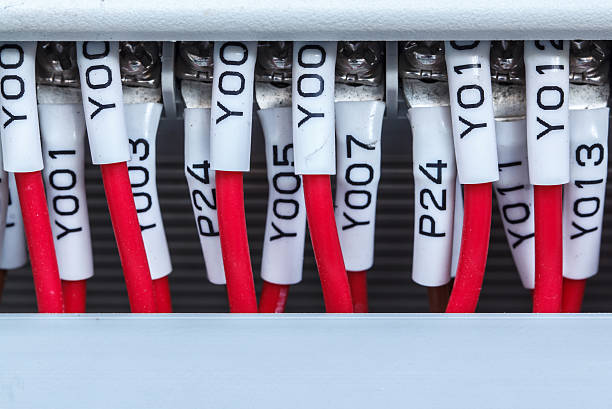
What Is Heat-Shrink Tube Printing?
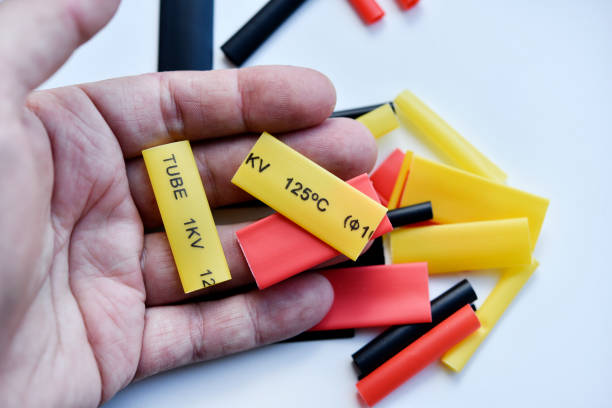
Heat shrink tubing is a special type of plastic tube that shrinks radially when heated. It is widely used in cable terminal identification, component protection, color coding and safety warnings. Heat shrink tube printing is a process of printing permanent information, for example, text, numbers, barcodes, and QR codes, directly on the surface of the tube. After that, it is heated and shrunk which leads to the integration of the label with the tube body, thus a strong and permanent label is created.
Unlike ordinary labels that are pasted on the surface, heat shrink tubes are fixed through physical contraction without relying on glue, so they are not easy to fall off and are not affected by oil stains or environmental changes.
The core challenge lies in:
- Weather resistance: The sign needs to withstand the tests of outdoor ultraviolet rays and high and low temperature cycles.
- Durability: Resistance to friction and erosion by chemicals (such as engine oil and solvents).
- Clarity: The text and graphics must remain clear and legible after contraction, without distortion or deformation.
This is fundamentally different from ordinary paper or synthetic label printing, and it puts forward specific requirements for printers, consumables and processes.
Key Technical Features of Heat Shrink Tube Label Printers
1. Core printing technology: Thermal transfer
Thermal transfer printing: The solid ink on the ribbon (carbon ribbon) is transferred to the heat shrink tube through the heat print head. This is an absolutely mainstream technology because its printing effect is scratch-resistant, chemical-resistant and has an extremely long lifespan.
2. Core requirements for equipment
| Characteristics | Requirements | Reasons |
| Print resolution | 300dpi or higher recommended | Ensuring small font sizes and high-density barcodes remain clearly legible after shrinking |
| Print width | Must be compatible with common heat shrink tubing sizes (e.g., 3mm-25mm wide) | Precise matching avoids waste and incomplete printing |
| Print head pressure and temperature control | Adjustable and precise | Accommodating different materials (such as PVC and polyolefin) of heat shrink tubing ensures optimal ink adhesion |
| Ribbon compatibility | Must be compatible with resin-based ribbons | Resin-based ribbons provide the strongest heat, chemical, and physical friction resistance |
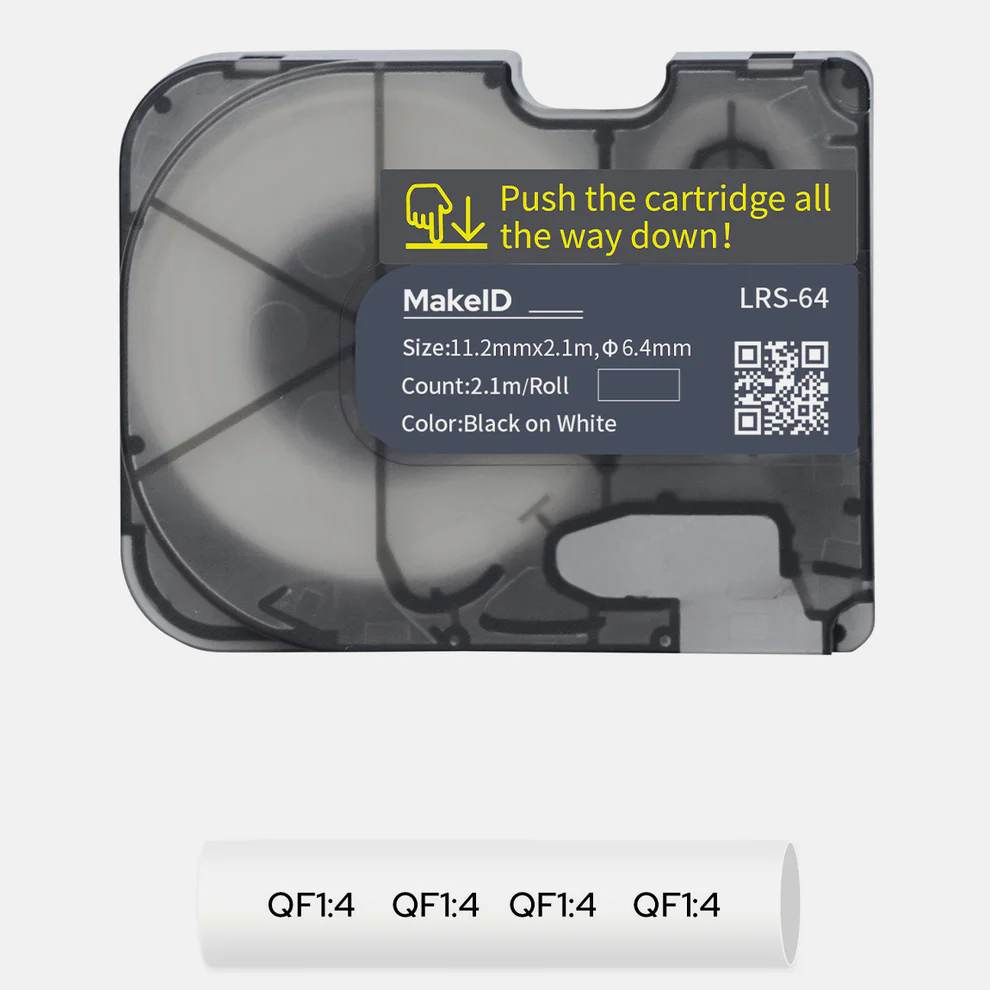
3. Specialized consumables
Resin Ribbon: It is the “golden partner” for heat shrink tube printing. After the ink is completely melted, it combines with the surface of the pipe to form an integrated mark.
Pre-coated heat shrink tubing: Some high-end heat shrink tubing has a special coating on its surface, specifically designed to optimize ink adhesion, which can further enhance print quality and durability.
4. Professional label design software
The software should have:
- Powerful batch generation function of serial numbers and date codes.
- Database connection (such as Excel, CSV) capabilities, enabling dynamic data printing.
- Barcode and QR code coding in compliance with industrial standards.
- The “pre-shrinkage” graphic design compensation function for the shrinkage rate of heat shrink tubing.
Core Application Scenarios Of Heat Shrink Tube Printers
- Electronics manufacturing industry: Component identification and traceability for PCB board connections and internal cables, meeting the requirements of the ISO quality management system.
- Electric Power, Electrical Engineering and Automation: Cable identification inside distribution cabinets and control cabinets to ensure safe and rapid installation and maintenance.
- Automotive industry: Automotive wiring harness marking, printing part numbers, batches and safety information, resistant to high-temperature and high-oil environments in the engine compartment.
- Aerospace: The highest level of durability, high-temperature resistance and lightweight requirements are imposed on the signs.
- Telecommunications and data centers: The intricate network cables and optical fiber markings within the computer room are the lifelines of operation and maintenance management.
Portable Printing Heat Shrink Tubing Solution: MakeID W110
For users who need on-site construction and flexible movement for heat shrink tube marking, MakeID W110 offers an efficient and professional option. It possesses multiple features that meet the requirements of professional heat shrink tube printing:
- Core technology matching: It adopts thermal transfer printing technology and supports dedicated resin-based carbon ribbons and heat shrink tube consumable cartridges, ensuring the durability and adhesion of printed labels in principle. It can withstand oil stains, friction and outdoor environmental challenges.
- Precision and Compatibility: It features an industrial-grade printing resolution of 300dpi, ensuring that the fine text and barcodes on the heat shrink tube remain clearly distinguishable even after it shrinks due to heat. Its printing width is compatible with common narrow-width heat shrink tube sizes, meeting the basic requirements for cable marking.
- Scenario-based advantages: Its built-in long-lasting battery and intelligent control through an APP design make it particularly suitable for design, modification and immediate printing at any time in distribution cabinets, equipment sites or laboratories, significantly enhancing the efficiency of pipeline identification, fault detection and asset inventory work.
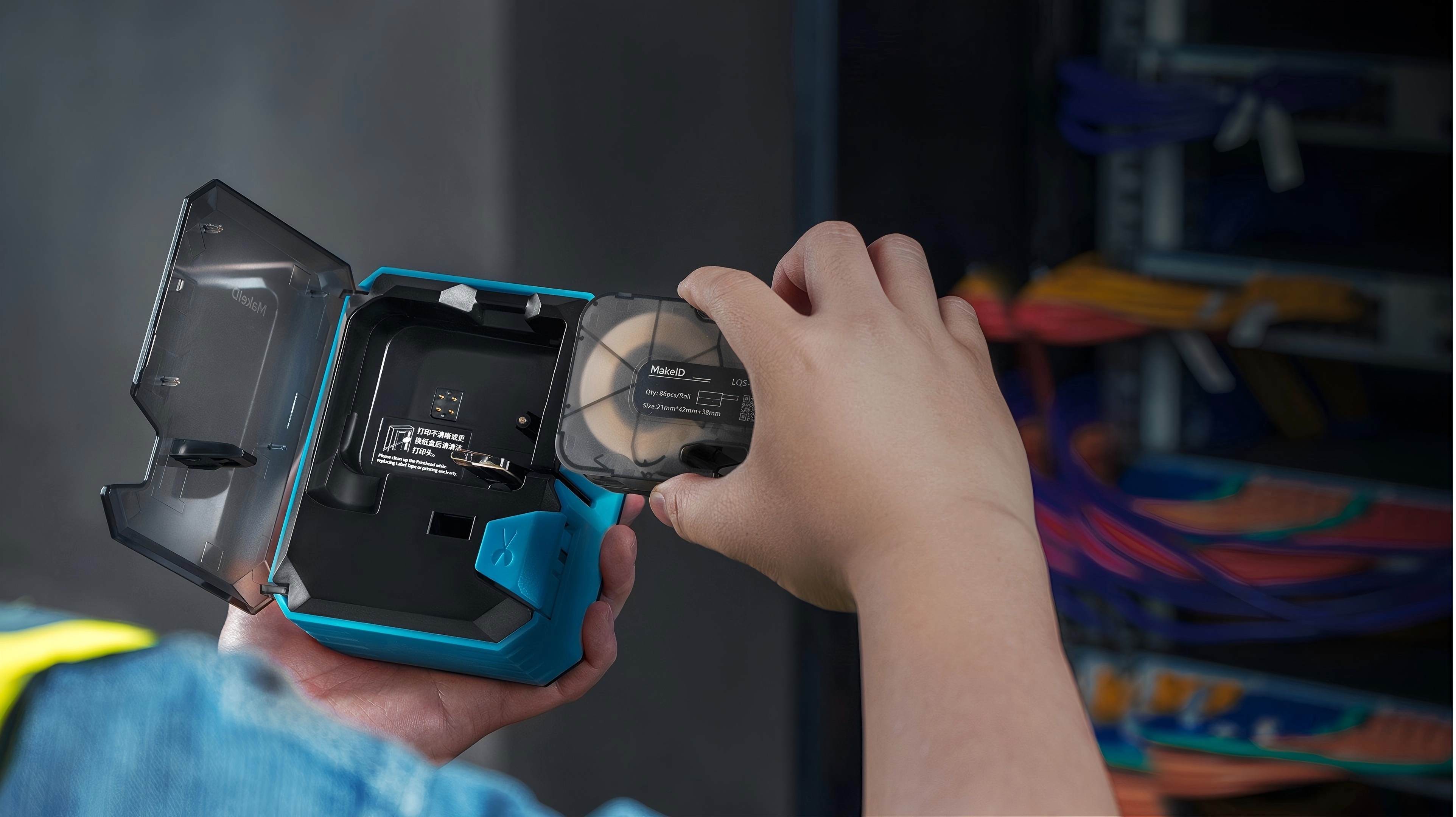
Whether in the power, communication or electronic manufacturing industries, W110 is the ideal choice for achieving professional and long-lasting cable identification.
Troubleshooting Common Problems in Heat Shrink Tube Printing
| Problem | Possible reasons | Solution |
| The print is not clear and there are white spots | The print head pressure is uneven or the temperature is too low | Clean the print head, increase the pressure/temperature, and ensure that the pipe passes through smoothly |
| The ink has poor adhesion and is easy to wipe off | The carbon ribbon does not match the pipe material. The temperature is too low | Switch to a dedicated resin-based carbon ribbon; Increase the printing temperature |
| The text is distorted and deformed after heat shrinkage | The graphic design did not take the shrinkage rate into account. Uneven heating | Design shrinkage rate compensation using software; Heat evenly using a hot air gun or an oven |
Conclusion
In industrial environments, the reliability of cable identification directly affects the safety and efficiency of the system. Choosing a professional label printer suitable for heat shrink tube printing not only enhances the quality of the labels but also brings long-term value to subsequent operation and maintenance.
For industrial users who pursue stability, durability and professionalism, thermal transfer label printers are undoubtedly the best choice for heat shrink tube printing.