
How to Label Cables by Application Type? Best Practices for Durable Cable Labels
Labeling cables may seem easy until you are faced with a knotted array of wires that are identical in the course of maintenance. It doesn’t matter if it’s the data center, industrial plant or office network, an accurate identification of the cable can cut down on time, reduce costly mistakes, and enhances security. It is important to understand how different kinds of cables require distinct methods of labeling.
Learn what it takes to mark cables based on kind of application, and also how to ensure that your labels for cables are transparent, durable and compliant with time.
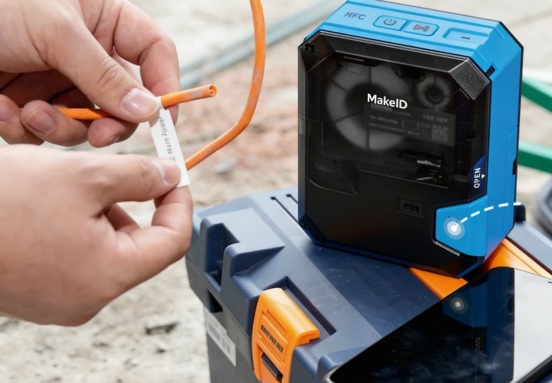
Understanding the Environment Before You Start Cable Labeling
Before selecting a label type you must evaluate the operational conditions that will affect the cable throughout its usage.
Indoor vs. Outdoor Installations
Indoor environments include offices and server rooms which maintain stable conditions yet require labels to withstand physical contact and friction and temporary heat conditions.
Outdoor installations face harsher conditions which include
- UV exposure
- Temperature fluctuations
- Moisture and rain
- Dust and debris
Outdoor cable labels need both UV protection and strong adhesion because these features stop labels from fading and peeling.
Low-Voltage vs. High-Voltage Applications
Low-voltage data cables require compact labels that display information clearly in small areas. High-voltage power cables need more robust materials which provide clear identification to comply with safety regulations and industry standards.
The labeling method needs to match the safety requirements which apply to the specific application.
Temporary setups require removable labels which function in testing environments.
Permanent vs. Temporary Installations
Permanent installations need laminated materials or heat-resistant options which manufacturers designed to last throughout extended periods.
The complete lifecycle understanding of your installation project enables you to select the appropriate labeling system beginning from your first requirements assessment.
Best Cable Labeling Methods by Application Type
Different cable types require different labeling strategies for maximum effectiveness.
| Application | Recommended Label Type | Key Focus |
| Small Gauge Wires (IT/Telecom) | Wrap-around / Flag labels | High visibility, label both ends |
| Fiber Optic Cables | Flag / Flexible wrap labels | Avoid compression, place near connectors |
| Power Cables | Heat-shrink / Self-laminating labels | Heat & chemical resistance, include voltage info |
| Large Cable Bundles | Self-laminating labels / Cable tags | UV resistance, strong adhesion |
| Faceplates & Panels | Straight printed labels | Consistent naming and alignment |
Small Gauge Wires (Telecom & IT Applications)
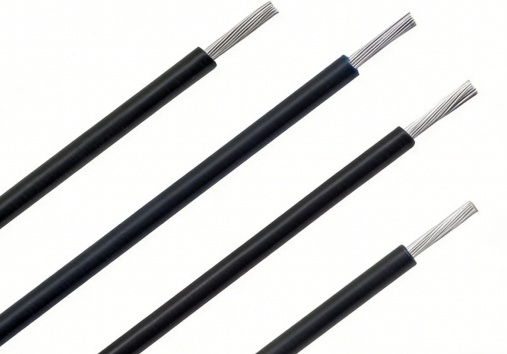
These are commonly found in:
- Patch panels
- Server racks
- Network cabinets
Because of the limited space available, wrap-around labels are the most effective choice. They fit tightly onto thin cables and safeguard printed text by providing clear laminate overlay.
For greater visibility in dense wiring flag-style labels also be useful, allowing the identifiers to stretch out but not completely wrapping all around cables.
Best Practices:
- Use high-contrast printing
- Keep text concise but clear
- Label both ends of the cable
Fiber Optic and Delicate Leads
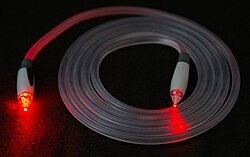
Fiber optic cables require extra care. In excess tension or pressure could damage fibers that are delicate.
Flag labels or flexible wrap labels are typically recommended because they:
- Avoid excessive compression
- Maintain readability in dense layouts
- Allow easy scanning during maintenance
Labels should be placed near connectors, instead of along mid-span sections to reduce stress on delicate cables.
Power Cables (Industrial & Electrical Panels)
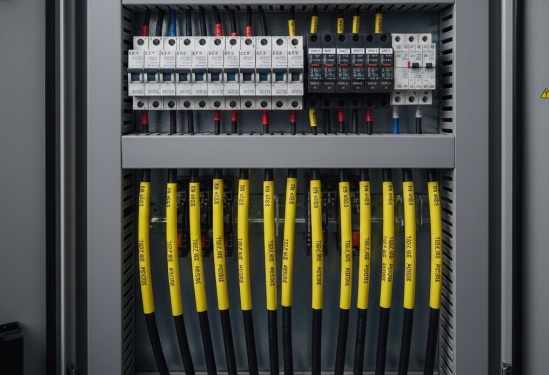
Power cables function in harsh conditions, which include the exposure to vibration, heat oils, chemicals, and heat.
Self-laminating tubing labels and heat-shrink tubing labels are perfect for these kinds of projects. These solutions permanently adhere to the surface of the cable providing the highest endurance and protection.
Best Practices:
- Label both the source and destinations ends
- Include voltage rating or circuit identification
- Inspect the electrical codes are in line with local regulations.
It is crucial to have durability, particularly in situations where equipment is running in a continuous fashion.
Large Cable Bundles (Industrial & Outdoor Installations)
Cable bundles are typically exposed to the elements of the outside or mechanical motion.
Self-laminating labels and tough cable tags are often employed in these situations. The transparent wrap layer protects the printed text from UV exposure dirt and moisture.
For outdoor environments:
- Choose UV-resistant materials
- Ensure strong adhesive performance
- Secure labels firmly to prevent rotation
Clear identification in industrial fields reduces troubleshooting time significantly.
Faceplates, Patch Panels & Equipment Ports
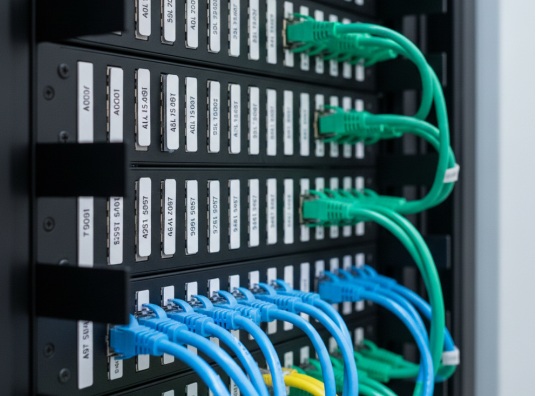
Not all cable labeling happens on wires themselves. Ports, faceplates, and panels also require clear identification.
Straight printed labels are ideal for:
- Office networks
- Server rooms
- Telecom closets
Consistency is essential. Utilize standard names and conventions to keep the alignment in place for a tidy professional look.
Labeling on the panel is clear and helps when it comes to tracing circuits and adding new connections.
Key Factors That Make Cable Labels Durable
Durability is the measure of how long a cable label is effective for months or years following the installation.
Adhesive Strength
Adhesive has to be able to adhere effectively to the material used to make the cable’s jacket, whether rubber, PVC or polyethylene. Insufficient adhesion can cause peeling and the loss of the identification.
Lamination Protection
A laminated layer protects printed text from abrasion water, and damage from handling. This is especially important in industrial or high-traffic environments.
Temperature Resistance
Temperatures that are extreme could cause the label to shrink or crack, or even detach. Make sure the material used for labels is within to the range temperature of the product.
Chemical and Oil Resistance
In industrial settings, cables are often exposed to cleaners, oils or chemical. Making sure that the cables are made of resistant materials will prevent fade and loss of.
How to Standardize Cable Labeling Across Projects
Consistency improves efficiency and reduces confusion.
- Develop a naming convention for all cables
- Use uniform font sizes and formats
- Label both ends of every cable
- Maintain documentation of labeling schemes
Standardization not only improves daily operations but also simplifies audits and expansions.
Choosing the Right Labeling Tools
Professional results require reliable labeling tools. When selecting a cable label printer, consider:
- Durable laminated label options
- Multiple tape widths for various cable sizes
- Clear, high-contrast printing
- Portability for fieldwork
MakeID labeling solutions ensure consistency, durability, and long-term performance across all application types.
Application-Based Cable Labeling Improves Reliability
Effective labeling of cables isn’t simply about affixing a label to a cable, it’s about adapting the labeling process to the particular application. For delicate fiber optics to high-end power cables, every scenario calls for specific materials and methods.
When you select MakeID labeling solutions, you can build a cable identification system that will last. Smart cable labeling can reduce downtime, improves security and helps keep every installation well-organized for many years to be.