
From Passive to Visible: How Digital Identification Transforms Fiber Network Resources
Fiber networks are becoming increasingly complex.
From data centers and telecom rooms to fiber distribution cabinets and FTTH access points, network operators may manage thousands of cables, fiber cores, ports, splitters, cabinets, and connection points across different locations.
These physical resources are essential to network operations, but they are often difficult to identify, track, and connect with digital network information.
A cable may be physically present in a cabinet, while its corresponding information exists somewhere else—in a network management system, spreadsheet, engineering record, or maintenance database.
When physical infrastructure and digital information are not properly connected, even a simple field task can require significant time and manual effort.
This is why digital identification is becoming an important part of modern fiber network management.
By giving every physical resource a unique identity and connecting it to digital information through labels, barcodes, QR codes, and management systems, telecom teams can turn traditionally “invisible” passive resources into visible, traceable, and manageable assets.
What Are Passive Fiber Network Resources?
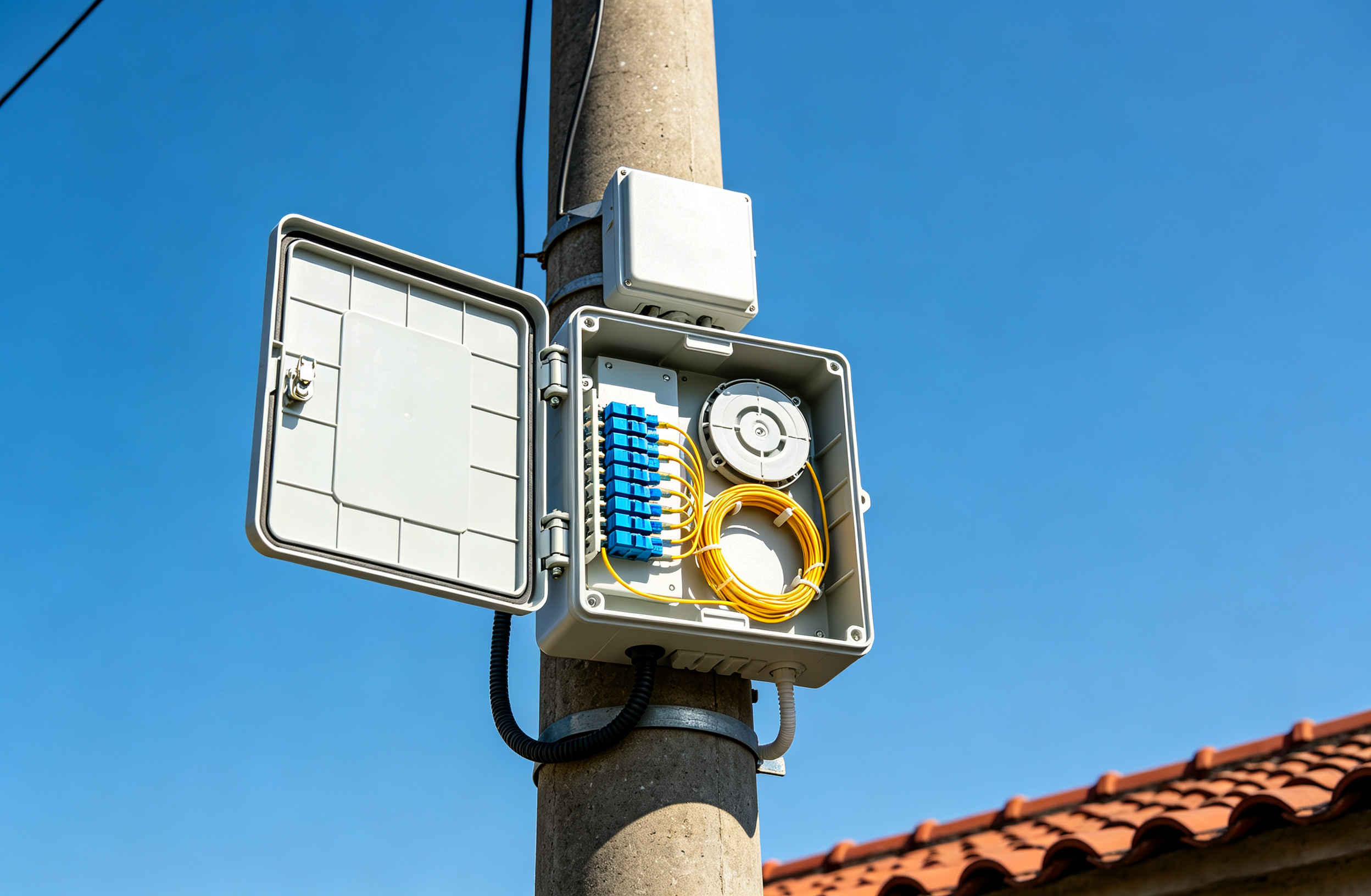
Passive fiber resources are the physical infrastructure components that support fiber connectivity without actively processing or transmitting network signals.
They can include:
- Fiber optic cables
- Fiber cores
- ODF ports
- Patch panels
- Optical splitters
- Fiber distribution boxes
- Cabinets
- Patch cords
- Connection points
- Fiber terminals
Although these resources do not actively process network traffic, they form an essential part of the physical network infrastructure.
For network operators and field technicians, knowing what a resource is, where it is located, and how it is connected is critical.
The challenge is that physical infrastructure is constantly changing.
New cables are installed. Ports are reassigned. Equipment is replaced. Connections are modified. Customers are added or disconnected.
Every physical change can create a corresponding change in network records.
Without a reliable identification system, keeping physical infrastructure synchronized with digital records becomes increasingly difficult.
Why Are Passive Resources Difficult to Manage?
1. Physical Infrastructure Is Constantly Changing
Fiber networks are not static.
During installation, expansion, and maintenance, technicians may:
- Add new fiber cables
- Replace damaged cables
- Reassign ports
- Modify connection paths
- Install new splitters
- Upgrade equipment
- Change customer connections
Each change needs to be accurately reflected in network records.
If the physical label and digital information are not updated together, discrepancies can quickly appear.
2. Physical and Digital Information Are Often Separated
A network management system may contain detailed information about a fiber connection.
But when a technician arrives at a cabinet, they still need to determine:
Which cable is this?
Which port does it connect to?
Which customer or distribution point does it serve?
What information is associated with this physical resource?
If the physical resource has no clear identity, technicians may need to manually trace cables or search through multiple records.
3. Manual Identification Creates Errors
Handwritten labels and inconsistent naming systems can make network identification difficult.
Labels may become:
- Difficult to read
- Inconsistent
- Damaged
- Missing information
- Difficult to match with system records
For large-scale telecom infrastructure, even a small identification error can lead to additional troubleshooting, rework, or unnecessary site visits.
What Does It Mean to Make a Passive Resource “Visible”?
A passive resource becomes visible when its physical identity can be clearly identified and connected to relevant digital information.
The process can be represented simply as:
Physical Resource → Unique ID → Label → Scan → Digital Information
For example, a fiber cable can receive a unique identifier such as:
FTTH-ODF01-PORT12
That identifier can be printed as text together with a barcode or QR code.
When a technician scans the label, the corresponding digital information can be accessed through the organization’s software or network management system.
The physical cable is no longer simply “a cable in the cabinet.”
It now has a recognizable digital identity.
This creates a connection between the physical network and the digital network management environment.
The Four Elements of Digital Fiber Identification
A reliable identification system generally includes four key elements.
1. Unique Identification
Every important physical resource should have a clear and unique identifier.
The naming system should be standardized across the organization.
For example:
- Cabinet ID
- ODF ID
- Port ID
- Fiber ID
- Splitter ID
- Customer connection ID
A standardized naming structure makes resources easier to search, identify, and manage.
2. Durable Physical Labels
The digital identity must also exist physically at the network site.
A label provides the visible identity of the resource.
Depending on the application, fiber networks may require:
- Flag labels
- Wrap-around labels
- Self-laminating labels
- Heat shrink labels
- Equipment labels
- Port labels
The label material should match the environment where it will be used.
Indoor telecom rooms may require different materials from outdoor cabinets or field installations.
3. Barcode or QR Code
Text provides immediate visual identification, while barcodes and QR codes can connect the physical resource to digital information.
For example, a QR code could provide access to:
- Fiber connection information
- Installation records
- Maintenance history
- Equipment information
- Network topology
- Work orders
- Digital documentation
This means technicians do not need to rely entirely on printed information.
The physical label becomes an entry point to the digital system.
4. Digital Synchronization
Identification becomes significantly more valuable when physical operations and digital records remain synchronized.
When a technician installs or changes a resource, the corresponding information can be updated in the management system.
This creates a more complete lifecycle record for the physical infrastructure.
How On-Site Digital Identification Works
A practical field workflow can be simple.
Step 1: Identify the Resource
The technician identifies the cable, port, cabinet, splitter, or other network resource that needs to be labeled.
Step 2: Assign or Verify the ID
The resource receives a unique identification number according to the organization’s naming rules.
Step 3: Generate the Label
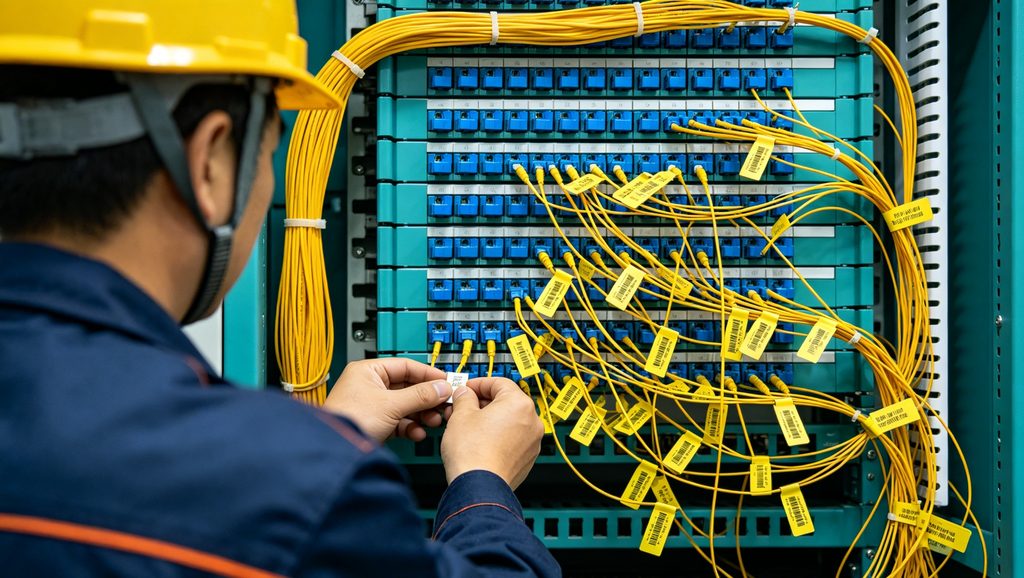
The technician generates the corresponding label, including text, barcode, or QR code when required.
Step 4: Print the Label On Site
Instead of preparing all labels in advance, a portable label printer allows technicians to print labels directly at the installation or maintenance site.
This is particularly useful when network conditions change during field work.
Step 5: Apply the Label
The label is attached to the corresponding physical resource.
The technician can immediately verify that the label matches the correct cable, port, or equipment.
Step 6: Scan and Verify
The technician scans the barcode or QR code to confirm that the physical resource corresponds to the correct digital information.
Step 7: Synchronize the Data
Once verified, the relevant information can be synchronized with the network management system.
This creates a continuous connection between the physical resource and its digital record.
Why On-Site Printing Matters
Traditional labeling workflows often require technicians to prepare labels before arriving at the installation site.
This can create problems when the actual network environment differs from the original plan.
For example, a port may be reassigned, a cable route may change, or additional connections may be installed.
Pre-printed labels may then become incorrect or unusable.
With portable on-site printing, technicians can create the correct label when and where it is needed.
This can help:
- Reduce label mismatches
- Reduce rework
- Improve identification accuracy
- Standardize label formats
- Speed up installation
- Simplify maintenance
For telecom field teams, this makes labeling part of the installation workflow rather than a separate preparation task.
From Installation to Maintenance: One ID, Full Lifecycle
Digital identification becomes even more valuable when it continues throughout the lifecycle of a network resource.
A fiber resource may go through several stages:
Installation → Identification → Verification → Operation → Maintenance → Troubleshooting→ Replacement → Decommissioning
At each stage, the same resource ID can help technicians and network managers identify the physical object and retrieve its associated information.
This creates a more consistent lifecycle management process.
Instead of treating labels as temporary stickers, organizations can treat them as the physical identity of network resources.
Digital Identification in Different Fiber Network Environments
Data Centers
Data centers contain large numbers of fiber cables, patch panels, racks, and ports.
Clear identification can help technicians locate the correct connection quickly and reduce the risk of disconnecting the wrong cable.
Telecom Rooms
In telecom rooms, multiple cables and connection points may be concentrated in a relatively small space.
Standardized labels help technicians understand connections without relying on memory or handwritten notes.
Fiber Distribution Cabinets
Outdoor and roadside cabinets may contain numerous fiber connections and splitters.
Durable identification is especially important because technicians may need to perform maintenance in challenging environments.
FTTH Deployments
In FTTH networks, fiber resources may extend from distribution points to individual buildings and homes.
Consistent identification helps connect customer-side physical infrastructure with network records.
Network Maintenance
During troubleshooting, technicians need to locate the correct physical resource as quickly as possible.
A clear label combined with digital information can reduce unnecessary cable tracing and help technicians verify the correct connection before performing maintenance.
Best Practices for Digital Fiber Identification
Establish Standard Naming Rules
Define how cables, ports, cabinets, splitters, and other resources should be named before large-scale deployment.
Use Consistent Label Formats
Keep font sizes, layouts, ID structures, and barcode or QR code placement consistent.
Choose Materials Based on the Environment
Consider moisture, temperature, sunlight, abrasion, and handling when selecting label materials.
Print Labels When Changes Occur
Do not continue using outdated labels after network changes.
Update physical identification whenever resources are installed, replaced, or reassigned.
Connect Physical and Digital Records
A label should not exist independently from the network management system.
The goal is to establish a reliable connection between the physical resource and its digital information.
From “Dumb” Resources to Digital Assets
Passive infrastructure is sometimes described as “dumb” because it does not actively process network information.
But the physical resource itself is not the problem.
The challenge is the lack of a clear identity connecting the physical resource to digital information.
Once every important resource has a unique identity, a durable physical label, and a corresponding digital record, passive infrastructure becomes significantly easier to understand and manage.
A fiber cable is no longer just a physical cable.
A port is no longer just a physical connection.
A cabinet is no longer just a box containing network components.
Each resource becomes a visible and identifiable part of the digital network.
Build a More Visible Fiber Network
As fiber networks continue to grow, simply installing more infrastructure is not enough.
Network operators also need better ways to identify, verify, and manage the physical resources that support connectivity.
Digital identification provides a practical bridge between the physical network and digital management systems.
By combining unique resource IDs, durable labels, barcodes or QR codes, on-site printing, and digital synchronization, telecom teams can make passive fiber resources more visible, traceable, and manageable.
The goal of fiber labeling is not simply to make cables easier to read.
It is to give every physical resource a reliable identity and connect that identity with the digital network system.
With the right identification workflow, field technicians can spend less time searching for resources and more time installing, maintaining, and improving the network.
From passive to visible, every resource can have an identity.
MakeID M100C: Built for Smarter Fiber Identification
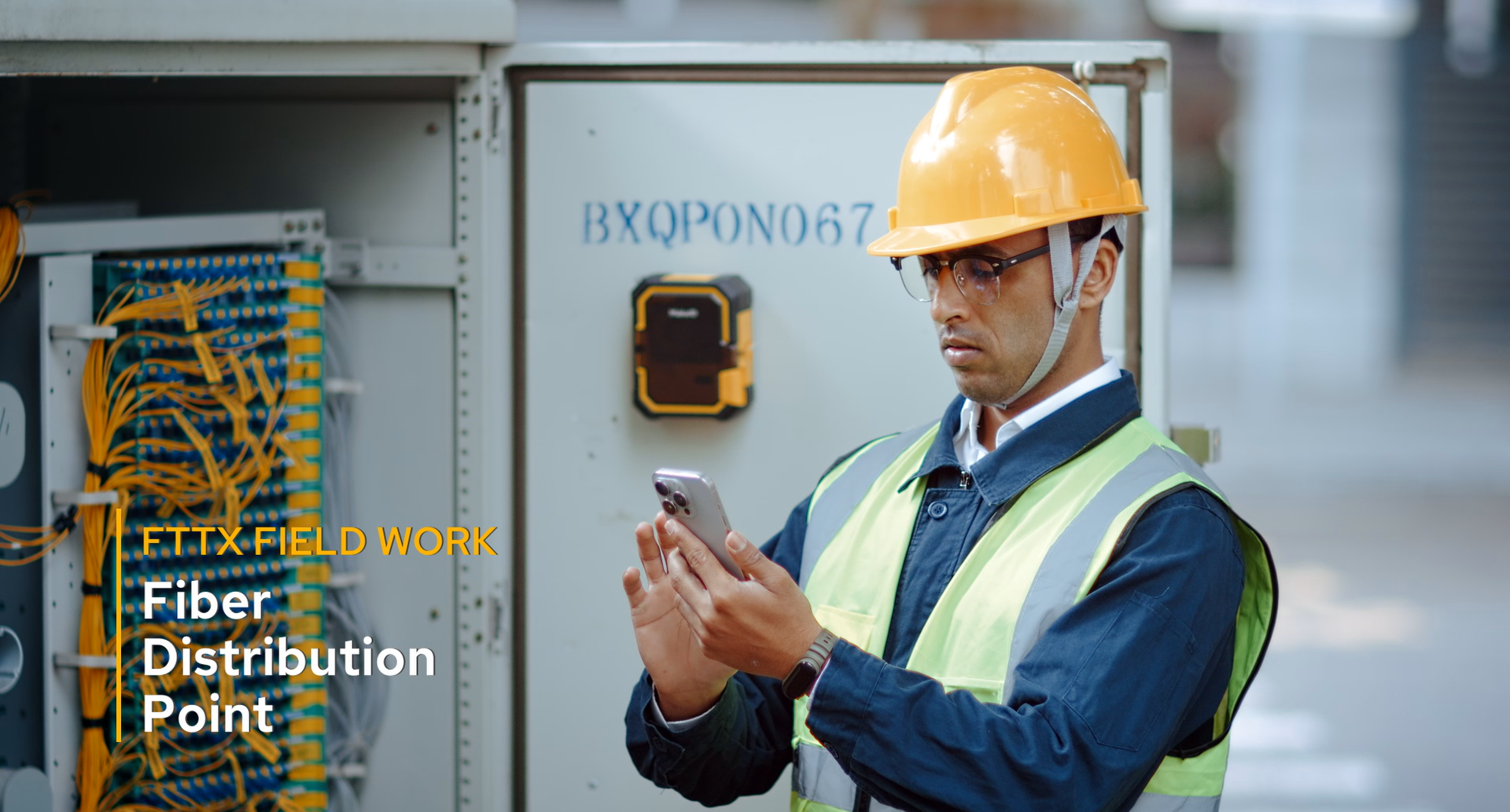
For telecom technicians working in data centers, telecom rooms, and fiber distribution cabinets, on-site labeling can make network identification faster and more accurate. The MakeID M100C is designed to support professional telecom and fiber labeling workflows, helping technicians create clear, durable labels directly in the field.
With the M100C, technicians can print identification labels for fiber cables, ODF ports, patch panels, cabinets, splitters, and other network resources when and where they are needed. Instead of relying on handwritten labels or pre-printed labels that may become outdated after network changes, technicians can generate the correct label on site and apply it immediately.
Combined with barcodes or QR codes, labels printed with the M100C can also serve as a physical connection to digital network information. This helps teams improve resource identification, reduce labeling errors, and maintain a more consistent connection between physical infrastructure and digital network records.
Whether for installation, maintenance, troubleshooting, or network expansion, the M100C helps turn fiber infrastructure from simply “present” into clearly identified, traceable, and manageable resources.