
FTTx Labeling Guide: How to Improve Fiber Network Installation and Maintenance with a Professional Label Printer
Fiber optic networks have become the foundation of modern communication infrastructure. From residential broadband and enterprise networks to large-scale telecom deployments, FTTx (Fiber To The x) solutions enable faster and more reliable connectivity.
However, as fiber networks continue to expand, managing thousands of cables, ports, and connection points becomes increasingly challenging. Without clear and durable identification, technicians may spend unnecessary time locating cables, troubleshooting faults, or verifying network connections.
This is why FTTx labeling has become an essential part of professional fiber network deployment and maintenance.
A reliable fiber cable label printer helps technicians create clear, durable identification labels directly in the field, improving installation accuracy, reducing maintenance time, and supporting efficient network management.
In this guide, we will explain what FTTx labeling is, why fiber identification is important, what labels are commonly used in fiber networks, and how the MakeID M100C Portable Label Printer helps telecom professionals improve field efficiency.
What Is FTTx Labeling?
FTTx labeling refers to the process of creating and applying identification labels for fiber optic infrastructure, including cables, ports, cabinets, distribution points, and network equipment.
The “x” in FTTx represents different fiber deployment scenarios:
- FTTH (Fiber To The Home)
- FTTB (Fiber To The Building)
- FTTC (Fiber To The Curb)
- FTTN (Fiber To The Node)
Each deployment requires accurate identification to ensure technicians can quickly understand network connections and perform maintenance efficiently.
Typical FTTx labels include:
- Fiber cable IDs
- Port numbers
- Splitter information
- ODF/ODN identification
- Customer connection information
- Installation dates
- Maintenance records
- QR codes or barcodes
A well-designed labeling system creates a clear connection between physical fiber infrastructure and digital network management systems.
Why Fiber Identification Is Critical for FTTx Networks
1. Faster Installation and Deployment
During fiber installation projects, technicians often handle hundreds of cables and connection points.
Without proper labeling:
- Cable tracing becomes difficult
- Installation mistakes increase
- Project completion time is extended
With professional FTTx labeling, technicians can quickly identify:
- Which fiber connects to which terminal
- Which port belongs to each customer
- Which cable requires testing or replacement
This improves installation efficiency and reduces rework.
2. Easier Maintenance and Troubleshooting
Fiber networks require regular inspection and maintenance.
When a network issue occurs, technicians need to quickly locate the correct cable or connection point.
Clear fiber identification labels help reduce:
- Troubleshooting time
- Service interruption
- Human errors
For telecom operators, faster maintenance directly improves customer experience.
3. Better Network Asset Management
Modern telecom networks contain valuable physical assets, including:
- Fiber cables
- Optical splitters
- Distribution boxes
- Network cabinets
- Optical modules
By assigning clear identification labels, operators can track infrastructure throughout its lifecycle.
Labels become the “digital identity” of physical network assets, supporting better planning and management.
Common Types of Fiber Optic Labels for FTTx Applications
Different fiber applications require different labeling solutions.
1. Flag Labels
Flag labels are commonly used for fiber optic cables because they provide a larger printing area while keeping information visible.
Advantages:
- Easy to read
- Suitable for small-diameter cables
- Supports barcodes and QR codes
- Ideal for fiber patch cords and pigtails
Flag labels are especially useful in:
- ODF cabinets
- Fiber distribution boxes
- Data centers
2. Wrap-Around Cable Labels
Wrap-around labels are designed to attach around cables and provide quick identification.
Common applications:
- Network cables
- Telecom cables
- Indoor fiber connections
They are suitable for environments where technicians need compact cable identification.
3. Heat Shrink Labels
For demanding environments, heat shrink labels provide excellent durability.
Benefits include:
- Strong attachment
- Resistance to moisture
- Long-term identification
They are often used for:
- Outdoor fiber deployment
- Industrial environments
- Permanent cable marking
Challenges of Traditional FTTx Labeling
Many field technicians still face challenges when managing fiber identification.
Limited Mobility
Large desktop printers cannot easily be used at:
- Fiber access points
- Outdoor cabinets
- Construction sites
Technicians need portable equipment that can move with them.
Poor Print Durability
Fiber labels may be exposed to:
- Sunlight
- Temperature changes
- Dust
- Moisture
- Frequent handling
Low-quality labels can fade or become unreadable over time.
Slow Manual Labeling
Handwritten labels create problems:
- Different handwriting styles
- Missing information
- Difficult tracking
Professional printing ensures consistent and readable identification.
Choosing the Right Fiber Cable Label Printer for FTTx
When selecting a label printer for telecom applications, consider these factors:
1. Portable Design
FTTx projects often require technicians to work in different locations.
A portable fiber cable label printer should be:
- Lightweight
- Battery powered
- Easy to carry
- Suitable for field conditions
2. High-Resolution Printing
Fiber identification often requires printing:
- Small characters
- Port numbers
- Barcodes
- QR codes
A high-resolution printer ensures labels remain readable.
3. Durable Thermal Transfer Printing
Thermal transfer printing is preferred for telecom labeling because it provides:
- Sharp text
- Long-lasting prints
- Better resistance to environmental conditions
Professional telecom labeling solutions commonly use thermal transfer technology for durable field identification.
Recommended Solution: MakeID M100C Portable Label Printer for FTTx
For telecom technicians and fiber installation teams, the MakeID M100C Portable Label Printer provides a practical solution for on-site FTTx labeling.
Designed for field applications, M100C helps technicians create professional fiber identification labels wherever installation and maintenance take place.
Why Choose MakeID M100C for FTTx Labeling?
1. Built for Telecom Field Work
Unlike traditional desktop printers, M100C is designed for mobile deployment.
Technicians can bring the printer directly to:
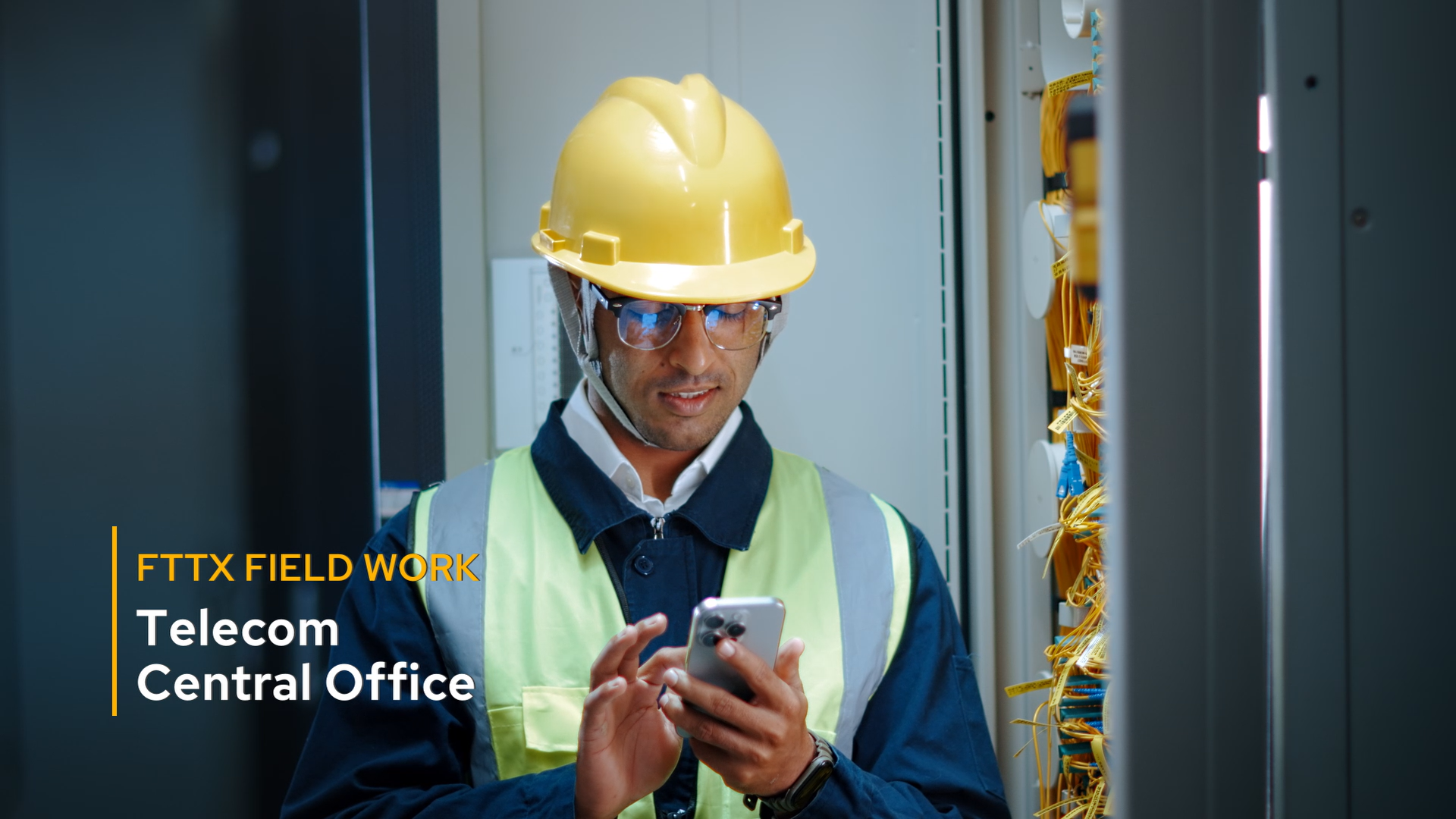
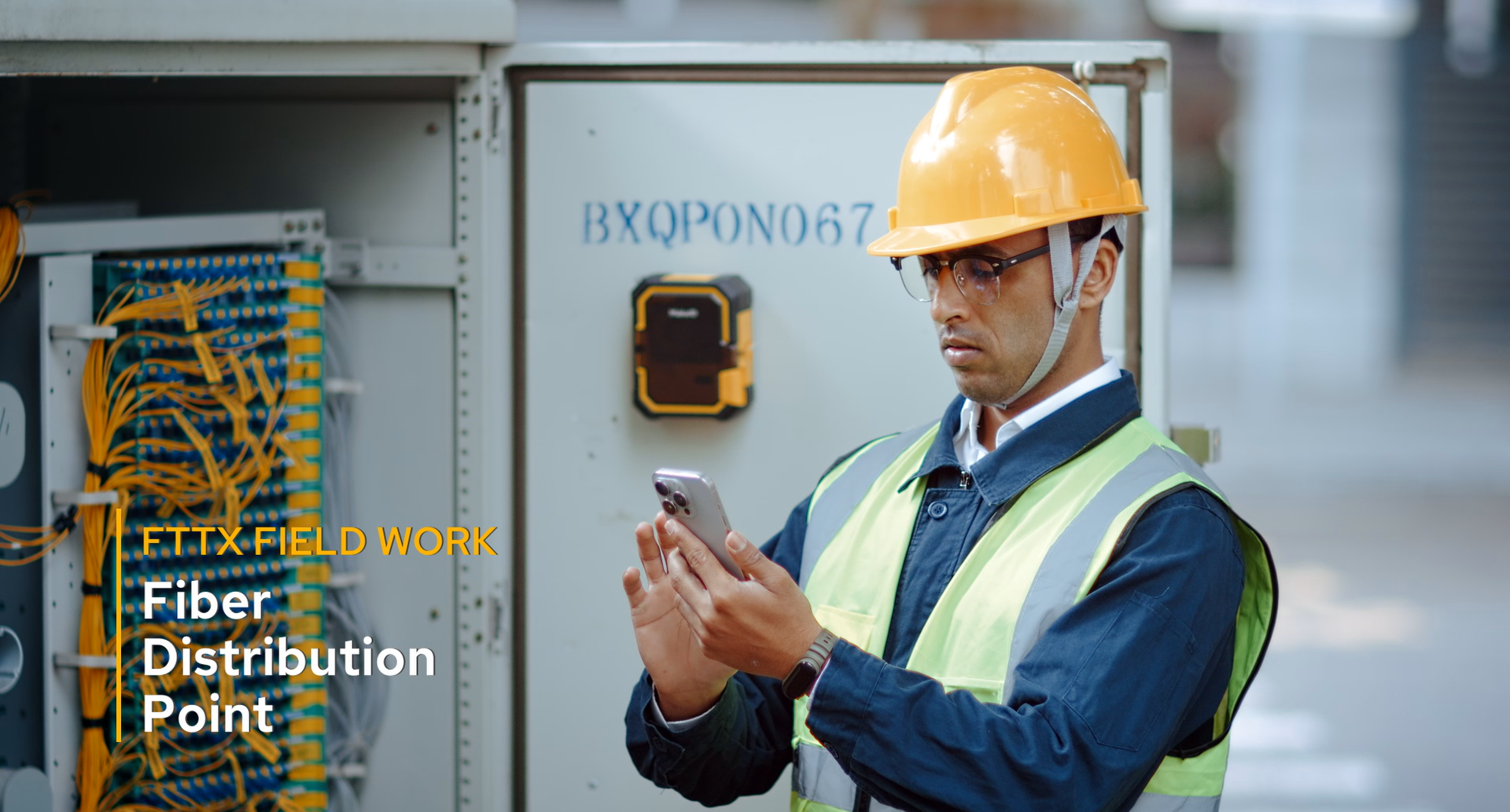
- Fiber distribution points
- Optical cabinets
- Telecom rooms
- Network installation sites
This reduces the need to return to the office for label preparation.
2. Clear and Durable Label Printing
M100C supports high-quality thermal transfer printing, helping technicians create labels that remain readable during long-term network operation.
Suitable applications include:
- Fiber cable identification
- Port labeling
- Equipment identification
- Maintenance tags
3. Flexible Label Applications
M100C supports multiple labeling scenarios:
Fiber Cable Labels
- Fiber numbers
- Connection paths
- Network information
Equipment Labels
- Cabinets
- Optical devices
- Network equipment
Field Maintenance Labels
Create temporary or permanent identification during installation and repair.
4. Designed for On-Site Efficiency
Telecom projects require speed and flexibility.
With a portable labeling solution, technicians can:
- Print labels immediately
- Reduce installation errors
- Standardize labeling formats
- Improve maintenance efficiency
FTTx Labeling Best Practices
1. Create a Standard Label Format
A consistent labeling system should define:
- Cable naming rules
- Port identification format
- Location information
- QR/barcode usage
2. Use Durable Materials
Choose labels based on the environment:
Indoor:
- Polyester labels
Outdoor:
- Weather-resistant materials
Permanent installation:
- Heat shrink labels
3. Update Labels During Maintenance
Network changes happen frequently.
Technicians should update labels whenever:
- New cables are installed
- Equipment is replaced
- Network routes change
Conclusion: Improve Fiber Network Management with Professional FTTx Labeling
As fiber networks become larger and more complex, accurate identification is essential for efficient installation and maintenance.
A professional FTTx labeling solution helps telecom teams:
- Install networks faster
- Reduce troubleshooting time
- Improve asset management
- Maintain accurate infrastructure records
For field technicians who need a portable and reliable labeling solution, the MakeID M100C Portable Label Printer provides the flexibility and durability required for modern fiber deployment.
From FTTH projects to telecom maintenance operations, professional fiber labeling helps build smarter, more efficient communication networks.