
Barcodes and QR Codes: When to Choose Each Label for your business?
As businesses transition into an increasingly digital era, scannable labels have become an essential component for improving accuracy, efficiency and traceability. From retail stores and warehouses to network cables installation and managing assets across multiple facilities – choosing between barcodes or QR codes could make a major difference to operational efficiencies.
MakeID label printer solutions to easily print both label types: barcodes and QR codes can both be printed easily, yet their functions and ideal use cases differ substantially. This article covers their differences so you can make an informed decision when choosing either type. This piece discusses their various uses as well as when to choose each option and which fits into your business needs best.
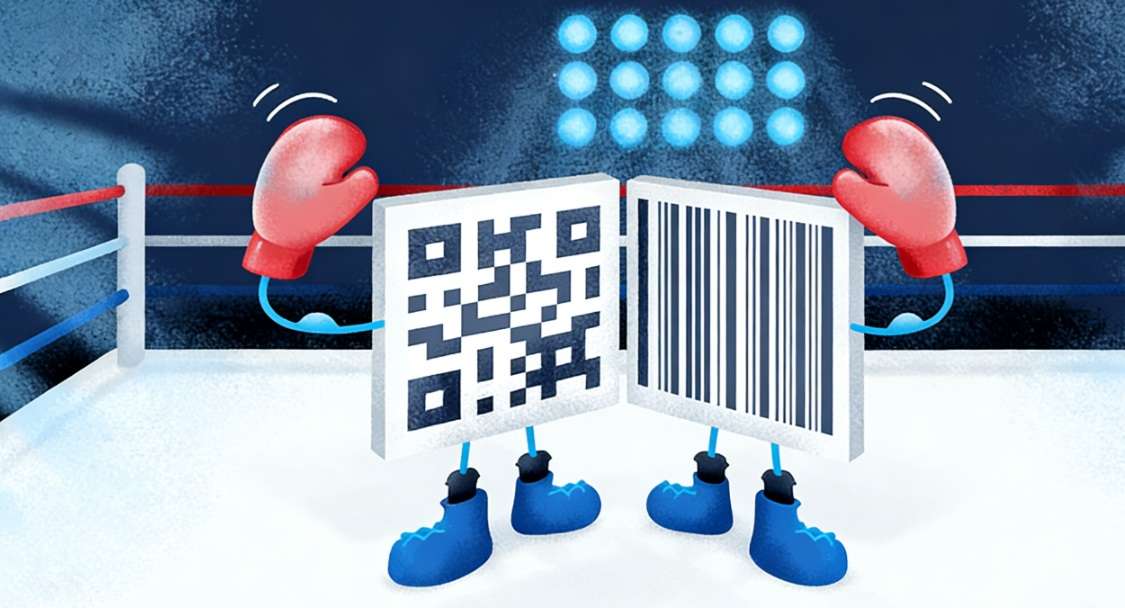
When to Use Barcode Labels
A barcode is a one-dimensional (1D) barcode composed of parallel lines with differing widths that store limited data–typically numbers or product codes–that can be read by laser scanners and imaging devices.
Common formats used in retail, manufacturing and warehouse environments include UPC, EAN and Code 128, making barcode labels one of the most widely adopted identification methods worldwide.
Advantages of Barcode Labels
Barcodes remain one of the most widely adopted identification methods worldwide. Their benefits include:
- Fast scanning with extremely high accuracy
- Low printing cost and compatibility with almost all printers
- Simple implementation with existing POS and warehouse systems
- Small size, making them ideal for compact labels or cable tags
Barcodes excel in scenarios where speed and simplicity matter most.
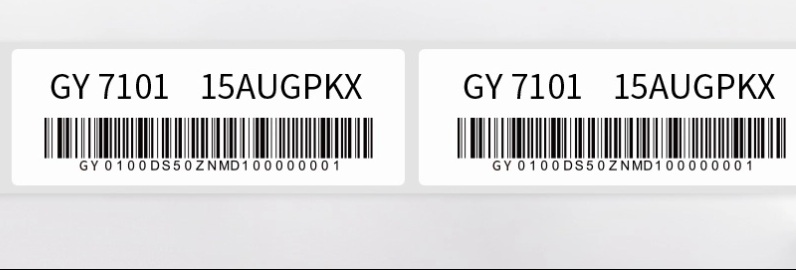
Best Use Cases for Barcode Labels
Barcodes are ideal for:
- Warehousing and inventory control – Businesses can quickly scan SKUs, storage bins, and inbound/outbound shipments.
- Retail product labeling – Retailers rely on UPC/EAN barcodes for pricing and checkout operations.
- Logistics and shipping – Packages and cartons often use Code 128 for batch numbers, tracking IDs, and routing.
- Cable and wire labeling – Barcodes printed on flexible labels help technicians identify network lines, electrical cables, and patch panels efficiently.
MakeID industrial printers—such as the D50 —can produce sharp, durable barcodes suitable for all of these applications.
When to Choose QR Code Labels
A Quick Response Code (QR code) is a two-dimensional (2D) matrix code which stores information both horizontally and vertically, offering significantly more space than traditional barcodes – up to thousands of characters!
At their core, QR codes can be read by any modern smartphone – making them highly versatile and user-friendly.
Advantages of QR Code Labels
QR codes offer several advantages over traditional barcodes:
- A high data capacity suitable for URLs, text, contact information, serial numbers and manuals as well as more complex uses;
- Can be scanned from any angle for maximum efficiency;
- Optimized smartphone compatibility eliminates professional scanner costs;
- Error correction allows the code to remain legible even after being damaged partially;
- Supports interactive experiences by linking to websites, videos or digital documents
These advantages make QR codes ideal for businesses that want to combine offline physical labels with online digital information.
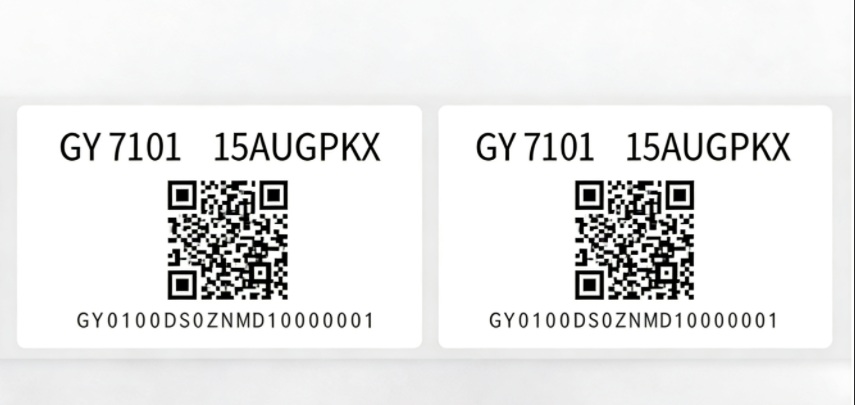
Best Use Cases for QR Code Labels
QR codes are commonly used in:
- Asset management and equipment tracking – Technicians can scan QR codes to view device status, maintenance records, or repair history.
- Cable and network installations – A QR code can store wiring diagrams, configuration notes, or router information.
- Product manuals and digital documentation – A single QR label can link to online manuals, spec sheets, or troubleshooting guides.
- Product authenticity and traceability – Brands use QR codes for anti-counterfeit verification or batch-level tracking.
- Marketing and customer engagement – QR codes printed on packaging can lead to websites, discount pages, or product registration forms.
MakeID high-resolution label printers-such as the EP53-can produce small yet scannable QR codes that help businesses integrate digital processes.
Barcodes vs. QR Codes: A Direct Comparison
To help you choose more effectively, here’s a simplified comparison:
| Feature | Barcode | QR Code |
| Data Capacity | Low | Very High |
| Scan Device | Laser scanner | Smartphone or scanner |
| Scan Direction | One direction | Any direction |
| Durability | Good if printed well | Requires higher resolution |
| Size Flexibility | Very small possible | Needs minimum size |
| Best For | Inventory, retail, cable IDs | Asset tracking, manuals, digital links |
This comparison highlights that neither code is universally better—each is optimized for different business needs.
How to Choose the Right Label for Your Business?
Selecting the right code format depends on your workflow and the amount of information you need to store.
Choose a Barcode If…
- You need fast, repeated scanning
- Your workflow involves Amazon-style warehouse operations
- Your business uses POS or ERP systems
- Your labels are small (e.g., cable IDs or product SKUs)
- You only need to encode serial numbers or basic identifiers
For these tasks, barcodes remain the most efficient solution.
Choose a QR Code If…
- You need to store more data than a barcode can handle
- You want users to scan with smartphones
- You want to attach manuals, diagrams, or videos
- You need digital traceability or anti-counterfeit features
- You maintain equipment or assets across multiple locations
QR codes help bridge physical assets with digital information seamlessly.
Choose Both (Hybrid Labeling) If…
Some businesses benefit from combining barcodes and QR codes on the same label—something that MakeID printers support perfectly.
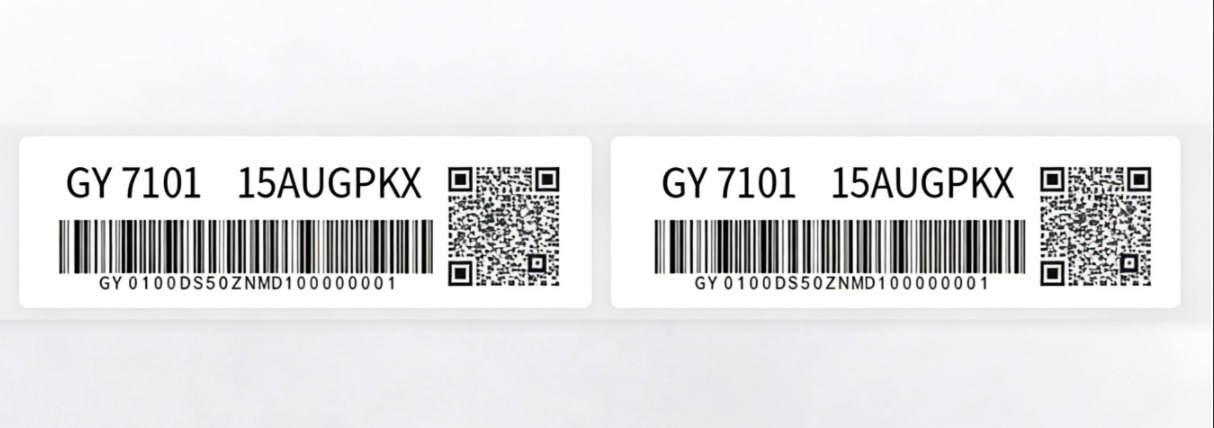
Hybrid labels are ideal for:
- Product packaging requiring both SKU identification and digital instructions
- Asset labels needing serial numbers plus online documentation
- Electrical and network projects where both technicians and managers need different types of information
Using both codes provides maximum efficiency and flexibility.
Summary
Barcodes and QR codes are versatile labeling tools, each catering to its own purpose. Barcodes excel at speed, simplicity and high-volume scanning; making them suitable for retail stores, warehouses, logistics hubs and cable management operations. While QR codes boast greater information capacity and smartphone accessibility – making them suitable for asset tracking workflows, manuals or customer engagement programs.
MakeID label printers give businesses the flexibility and versatility necessary to produce high-quality labels that suit any environment – whether barcodes, QR codes or both!
By selecting an effective labeling format, businesses can improve accuracy, streamline operations, increase productivity and create stronger links between physical products and digital information.