
Why Do Laboratories Need Cryo Labels? Durable From -196°C to 145°C

Lead Specialist, Telecom Digitalization & Identification at MakeID
As Lead Specialist at MakeID, he drives digital transformation for physical asset identification in FTTx. Optimizing field maintenance and data accuracy, he helps global telecoms reduce MTTR and enable real-time asset-data alignment.
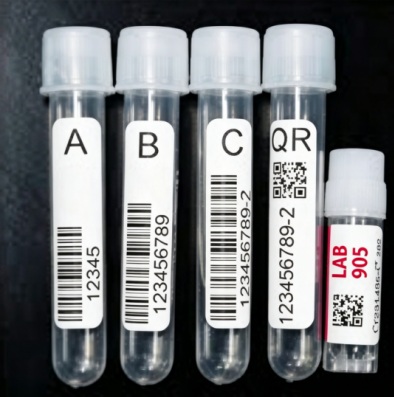
Imagine taking a valuable five-year-old cell line from liquid nitrogen only to discover an unidentified or peeling label. The irreparable loss of undetected samples is a devastating loss for any lab. The standard adhesives will fail under extreme conditions, and can cause damage to years of hard-earned research. This is the reason why specially designed cryo labels, crafted to withstand extreme temperatures between -196°C to 145°C, provide the most reliable protection for cryogenic vials.
The High Cost of Label Failure in Laboratories
In the management of high-value biological assets The label is as important as the specimen in the tube. But, the labeling process in laboratories is often ignored until a major failure occurs. Knowing why office-grade labels fail is the initial step to ensure the safety of your research.
Standard Labels as opposed to. Extreme Cold
From a perspective of materials science from a materials science perspective, most label adhesives are developed for use in room temperature. If exposed to temperatures lower than 40°C, most rubber-based or acrylic adhesives go through the process of undergoing a “glass transition.” The adhesives lose their flexibility, turn extremely brittle and then break or break off of the surface. In addition, conventional papers retain water during freeze-thaw cycles. making the label warp then curl before finally fall off from the curving surface of the cryogenic vial.
Irreversible loss of research and compliance risks
If a label fails then you end up with “orphan samples” , meaning biological materials that have unknown identities. Under tough biobanking rules, like the ISO 20387 standards for biotechnology, these unidentifiable samples are supposed to be discarded. The goal is to avoid cross-contamination and prevent data corruption. So in practice this can feel like a pretty brutal hit: research funding goes away, thousands of hours of work get wasted, and there’s also the possibility of regulatory compliance breaches especially in clinical settings.
Decoding the -196°C to 145°C Range: Why It Matters
A label for a laboratory must be a biochemical fortress. The description of “-196°C to 145°C” is not a random measure of marketing, it actually connects to the most rigorous scientific workflows of today.
Surviving Liquid Nitrogen Storage (-196°C)
Liquid nitrogen (LN2) storage, whether within the liquid phase (-196°C) or the vapor phase (around 150°C) is the most harsh conditions that any glue can endure. Cryo labels are manufactured with the help of advanced thermoplastic polymers, like particularly Polyester or nylon. These are combined with extreme-cold cross-linking adhesives which actually enhance their bonding strength when temperatures decrease. This means that the label stays permanently bonded to the vial after prolonged submersion into liquid nitrogen.
Withstand Autoclaving and Sterilization ( +145°C )
In the lab workflow it’s not only about extreme cold, because there is also extreme heat. Before cryogenic vials or containers are actually used, they often get high-pressure steam sterilization inside autoclaves. Regular labels tend to melt, contract, or just go completely black under that kind of stress. Premium cryo labels are made for this, they’re engineered for high thermal stability and can handle temperatures up to about +145°C. That means the label can be applied before sterilization, so the whole process feels smoother, and contamination risks drop.
Resistance against Laboratory Chemicals
Temperature toughness is only one side of it. In everyday protocols, labels also run into stubborn solvents and cleaning agents. High-quality cryo labels use chemical-resistant face stocks plus topcoats that help repel many typical degreasers and solvents. So whether the label is exposed to 100% ethanol, xylene, liquid nitrogen, or Dimethyl Sulfoxide (DMSO) , which is a common cryoprotectant that tends to aggressively dissolve standard inks and glues, the barcode and written text stay readable, and they do it 100% reliably.
Key Application Scenarios for Cryo Labels
Different lab environments require highly specific requirements, however the basic requirement of indestructible durability is the same.
Securing Cryogenic Vials and Microtubes
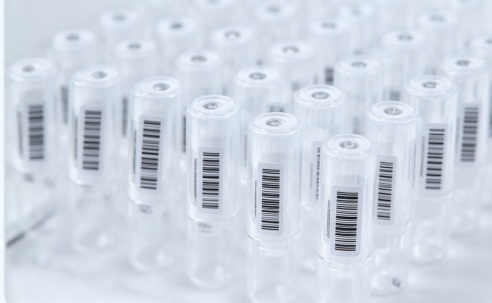
The most difficult applications of laboratory labeling is to secure small-diameter bottles, like 0.5ml, 1.5ml, and 2.0ml cryogenic vials. The curvature that is tight on these tubes causes the physical “memory effect” where standard rigid materials try to flatten out, which can lead to the edges lift (flagging). Cryo labels are extremely thin and extremely flexible that can be wrapped securely around small diameters, without getting caught on the dividers of freezer boxes.
Biobanking, IVF, and Cell Culture Storage
In fields that are specialized, like in vitro Fertilization (IVF) and the genomic biobanking process, as well stem cell studies, the storage of samples can span years. These facilities require immutable audit trails. Cryo labels are the archival-quality basis for long-term integrity of data. This ensures that barcodes scanned in 2026 can be work flawlessly when 2046 rolls around.
How to Print High-Quality Cryo Labels in Your Lab
Understanding the need for the cryo label is but half of the fight; applying accurate long-lasting data to these labels is crucial. Handwritten markers are prone to fading, smearing and misinterpretation by humans.
The Need for Reliable On-Demand Printing
In modern laboratories, efficiency is based on the automation of data tracking. Relying on handwritten scribbles is an unacceptable risk when dealing with complex alphanumeric sequences and 2D barcodes. Laboratories need an on-demand printing system that utilizes thermal transfer technology to embed resin-based ink directly into the label material, making it impervious to the extreme conditions discussed above.
Meet the MakeID D50: Your Go-To Printer for Cryo Labels
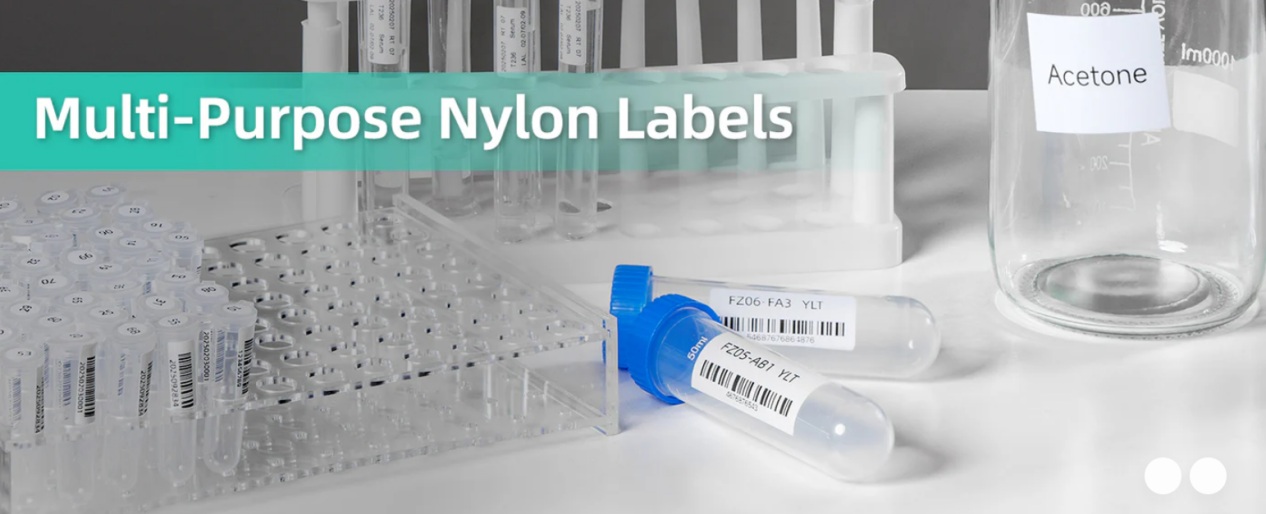
To increase the security of the laboratory labels You require specialized equipment. Take the MakeID D50, a sophisticated small-sized printing solution designed specifically for today’s lab environment.
Its MakeID D50 replaces bulky, old desktop printers with a sleek, compact design that can be easily placed on any bench in a lab that is full of. In a seamless integration with an intuitive mobile application, it enables researchers to create ultra-high resolution barcodes and QR codes and customized text formats in a matter of minutes. In addition, the D50 is precisely calibrated to print on durable cryo labels, ensuring that the high-contrast ink blends perfectly with the label’s surface, able to take the shock of dipping into liquid nitrogen.